Check out the incredible speakers joining us on Extra Crunch Live in March

Extra Crunch Live is off to a great start this year.

Lightspeed’s Gaurav Gupta and Grafana’s Raj Dutt taught us how to nail the narrative. Felicis Ventures’ Aydin Senkut and Guideline’s Kevin Busque showed us how valuable a simple pitch deck can be. And yesterday, Accel’s Steve Loughlin and Ironclad’s Jason Boehmig discussed the challenges of pricing and packaging your product. Next week, we’ll sit down with Bain Capital Ventures’ Matt Harris and Justworks’ Isaac Oats.

For those of you who followed the series last year, Extra Crunch Live is a brand new beast in 2021. We take a look at early-stage funding deals through the eyes of the founders and investors who made them happen, and those same tech leaders go through your pitch decks and give feedback and advice. Every single Wednesday at 12 p.m. PST/3 p.m. EST!

Extra Crunch Live is available for EC members only. It is but one of many reasons to join Extra Crunch, including but not limited to investor surveys, market maps and guest posts from proven thought leaders. Hit up this link to get started.

Today, I’m thrilled to announce the March slate for Extra Crunch Live. (Registration info for these events is at the bottom of the post.)


Sarah Kunst (Cleo Capital) + Julia Collins (Planet FWD)

March 10, 12 p.m. PST/3 p.m. EST

Julia Collins built a unicorn in the form of Zume, a robotics-focused pizza startup. Her latest venture, Planet FWD, has raised $2.7 million for climate-friendly food. Sarah Kunst, managing director of Cleo Capital, invested in the round, adding Planet FWD to a portfolio that includes mmhmm, Lunchclub, StyleSeat and more. Hear why they chose one another, what matters most in the relationship between an investor and a founder, and get their live feedback on audience-submitted pitch decks.


Emmalyn Shaw (Flourish Ventures) + Adam Roseman (Steady)

March 17, 12 p.m. PDT/3 p.m. EDT

Emmalyn Shaw co-manages a $500 million fintech fund at Flourish Capital, with portfolio companies that include Brigit, Chime, Clerkie, Cushion, EarnUp, Kin, Propel, and SeedFi. She also led the Series A deal for Steady, founded by Adam Roseman, back in 2018. Hear from Emmalyn and Adam about how they came together, what it takes to get funding and be successful in the fintech space, and get their live feedback on audience-submitted pitch decks.


Navin Chaddha (Mayfield) + Manish Chandra (Poshmark)

March 24, 12 p.m. PDT/3 p.m. EDT

Poshmark raised upward of $150 million before filing to go public in 2019. Today, it has a market cap north of $5 billion. Mayfield’s Navin Chaddha led the company’s Series A all the way back in 2011, back when Poshmark was called Gosh Posh. Hear Chaddha and Poshmark founder Manish Chandra discuss a decade of growth, and walk us through how they came together more than 10 years ago. Then the duo will take a look at pitch decks submitted by audience members.


As a reminder, Extra Crunch Live is available for EC members only. It is but one of the many reasons to join Extra Crunch, including but not limited to Investor Surveys, Market Maps and the EC Perks Program. Interested? Hit up this link to get started.

Register for the March episodes of Extra Crunch Live below.

See you there!

Apple TV+ arrives on Google TV devices, starting with Chromecast

Google announced today the Apple TV+ streaming service has now arrived on the Google TV platform, starting with Chromecast with Google TV. It will also become available on Google TVs from both Sony and TCL, with expansions to other Android TV-powered devices in the months to come, Google says.

Google TV was introduced last September as the new way Google will refer to its interface for Chromecast, where it combines streaming services, live TV via YouTube TV and other Google offerings, into one user interface — making it more competitive with similar offerings from Apple and Amazon. Today, the platform supports a wide range of top streaming services, like Disney+, Netflix, HBO Max, Peacock, Prime Video, CBS All Access, Hulu, Soing and others, including, of course, YouTube.

With the added support for Apple TV+, users who already have subscriptions will be able to tune into its original programming, which includes movies, documentaries and series like “Ted Lasso,” “For All Mankind,” “Servant,” “The Morning Show,” “Dickinson” and others. The app also provides access to the user’s library of movies and shows purchased from Apple, recommendations, and supports Family Sharing. The latter allows up to six family members to share a subscription to Apple TV+ and Apple TV channels.

Following the app’s launch on Google TV, users in the U.S. will be able to browse Apple’s Originals in Google TV’s personalized recommendations and surface its content in search results. Users can also ask Google Assistant to open the Apple TV app or they can request an Apple Original title by name. And they’ll be able to add Apple TV+ programming to the Google TV Watchlist. Google says these features will arrive in the “coming months,” however, instead of at launch.

The launch makes Google TV one of the last of the major streaming device platforms to support Apple’s streaming service, which is otherwise broadly available.

Apple TV+ debuted in November 2019 for Apple customers, and later rolled out to non-Apple platforms including, that same year, Roku devices and Amazon’s Fire TV platform. Today, it’s also now available across a variety of smart TVs by Samsung, LG, Vizio and Sony; gaming consoles including PlayStation (PS4 & PS5) and Xbox (One, Series X, Series S); and via the web.

With Ironspring Ventures, Texas gets a $61 million new fund focused on ‘industrial’ technologies

From the chemical refineries that line the Gulf Coast to oilfields of West Texas, heavy industry has always been a big part of the economy in the Lone Star State.

Now, as venture capital moves in to the state as part of an exodus from California, a new fund is combining Texas’ industrial past with its high technology future.

That fund is Ironspring Ventures, which has closed its first investment vehicle with $61 million nearly two years after it launched its fundraising efforts.

The fruit of a partnership between Adam Bridgman and Peter J. Holt, the co-founders of an earlier investment vehicle called Holt Ventures, and Ty Findley, a former investor at G.E. Ventures and the Pritzker Group, the firm’s mission is to “accelerate digital adoption across legacy heavy industries,” according to Bridgman.

Each member of the Ironspring team has a long history with industrial technologies and deep roots in the Texas economy. Findley, a managing partner, grew up “in the middle of nowhere in East Texas” but comes from a family of entrepreneurs who built businesses along the Texas and Louisiana border.

“I joined up with our other co-founder and managing partner, Peter Holt,” said Bridgman. “That was really step one for us pursuing this broader mission of investing in legacy industry at the early stage of digital innovation. We were fortunate to find a strong cultural alignment and rare experience with Ty [Findley]. After co-investing over a period of time we got to know each other very well. We joined forces and it’s been a nice journey over the last year-and-a-half of formally launching and formally closing the fund in December.”

The first deal that the three men invested in together was Augmentir, a service providing information and support for remote workers. “Everything comes back to these words ‘digital industrial’ for us,” said Findley. “There’s this massive gap where people forget that almost the majority of GDP in this country is manufacturing.”

So far, Ironspring has invested in four portfolio companies, Mercado, which is developing a service to improve the import process; Icon Build, a company developing 3-D printing tools and technologies for the building industry;  FastRadius, which brings design tools and services for prototyping and industrial design; and GoContractor, a safety and compliance management service.

The firm’s average check size is around $2.5 million and investments will range from $1 million on the low end to $4 million on the high end, according to the firm’s partners. That means looking for what the firm called “post-seed” deals.

And the firm is looking for technology that is transforming how businesses design products, build them, and provide services and operate across the wide range of industrial output.

“We’re trying to organize around those themes,” said Bridgman. 

Daily Crunch: Parler is back online

Parler returns from limbo, Uber lobbies Europe and we have more details about Notion’s outage. This is your Daily Crunch for February 15, 2021.

The big story: Parler is back online

The social network known for its far-right user base was dropped by infrastructure provider Amazon Web Services for posts advocating violence. Now it’s back online, albeit with all old posts and content removed for reasons that are currently unclear.

The company says the new site is built with “sustainable, independent technology and not reliant on so-called ‘Big Tech’ for its operations.”

In addition to a new website, Parler also has a new chief executive. Following the ouster of John Matze, Parler is now led by interim CEO Mark Meckler, founder of the Tea Party Patriots — one of the groups involved in organizing the January 6 pro-Trump demonstration that turned into a storming of the U.S. Capitol.

The tech giants

Uber lobbies for ‘Prop 22’-style gig work standards in the EU — The ride-hailing and on-demand food delivery giant has published a white paper in which it lobbies European policymakers for what it describes as a “new standard” for platform work.

GM unveils a refreshed Chevy Bolt EV and its bigger, yet compact crossover sibling — The new vehicles share much of the same DNA but have their own distinct differences.

Google slapped in France over misleading hotel star ratings — Google has agreed to pay a €1.1 million fine over misleading star ratings for hotels.

Startups, funding and venture capital

Notion’s hours-long outage was caused by phishing complaints — With the company’s domain offline, users were unable to access their files, calendars and documents.

Delivery company goPuff is in talks to acquire the UK’s Fancy — Fancy has a strikingly similar model to its potential buyer, leading some to describe it as a mini goPuff.

Private equity firm Marlin snatches up e-commerce optimization platform Lengow — For merchants using Lengow, the platform is the glue that makes all the moving parts of e-commerce stick together.

Advice and analysis from Extra Crunch

Investors’ SPAC push could revamp the private market money game — Is this venture capital’s natural evolution?

From dorm rooms to board rooms: How universities are promoting entrepreneurship — Earlier this year, 15 top U.S. universities joined forces to launch a one-stop shop where corporations and startups can discover and license patents.

The Series A deal that launched a near unicorn: Meet Accel’s Steve Loughlin and Ironclad’s Jason Boehmig — Their episode of Extra Crunch Live streams on Wednesday at 3 p.m. EST/12 p.m. PST.

(Extra Crunch is our membership program, which helps founders and startup teams get ahead. You can sign up here.)

Everything else

Examining the ‘pipeline problem’ — An AI Now researcher analyzes the history behind a common excuse for the lack of diversity in tech.

India lifts restrictions on mapping and surveying to help local firms — The Indian government said local firms will no longer need a license or other permission to collect, generate, store and share geospatial data of the country.

Meet the Black Female Founders from TC Include at TC Sessions: Justice 2021 — Don’t miss your chance to meet some founders currently participating in TechCrunch’s Include program.

The Daily Crunch is TechCrunch’s roundup of our biggest and most important stories. If you’d like to get this delivered to your inbox every day at around 3pm Pacific, you can subscribe here.

4 strategies for deep tech startups recruiting top growth marketers

Jessica Li
Contributor

Jessica is on the growth marketing team at Zageno, a multivendor, online marketplace for life science products, and is head of content at Elpha, a Y Combinator-backed community of 40,000+ women in tech.

In an earlier article, I wrote about how and when to build go-to-market teams at deep tech companies. There, I noted that it is more important for growth hires at deep tech companies to have functional expertise than industry expertise.

But how do deep tech companies connect and cultivate strong relationships with talented nontechnical growth people outside of their industry? In this article, I answer this question, articulating exactly how to:

  • Write role descriptions that entice talented growth people.
  • Create company marketing materials that brands your startup well to talent.
  • Craft thoughtful end-to-end candidate experiences for growth talent.
  • Close top growth candidates.

Incredible growth people are independent and creative and are drawn to environments that explicitly value these traits.

Write a job description that explains how you operate

Underscore the autonomy. Incredible growth people are independent and creative and are drawn to environments that explicitly value these traits. Growth talent wants to know that they have room to experiment, fail and iterate with the support and trust of their company. Highlight the creative agency you give to your growth team. Paint the role as one of managing a subset of the startup and its initiatives.

Show you are ready for a growth marketer. Do not expect your growth person to be a panacea for the company. Growth people work cross-functionally, but there are boundaries where the growth role starts and ends. Growth people cannot sell a product that is not ready. Growth people cannot fix product bugs. Growth people cannot replace excellent customer service. Ensure your role description is clear on what the growth person would do and what they would lean on other teams for. Demonstrate that you have a team structure in place where a growth marketer could fit in and thrive.

Articulate your talent needs. Growth is a broad category. Some growth marketers are more creative. Others are more quantitative. Some have more industry experience. Others have more functional experience. Be clear on what type of growth marketer you need and how this person’s talents would complement those of the existing team.

Use marketing to share your history and chart the future

Generate excitement and establish credibility. People can naturally be skeptical about new technologies and younger companies. Do anything you can to ameliorate these concerns. Link to relevant news articles from well-known publications and thought leaders in your industry. Incorporate customer testimonials that speak to the transformative impact your product creates. Name drop well-known advisors, investors and team members.

01 Advisors, the venture firm of Dick Costolo and Adam Bain, has closed fund two with $325 million

Dick Costolo and Adam Bain, renowned early Twitter execs who served as the company’s CEO and its chief operating officer, respectively, have quietly closed a second venture fund just one-and-a-half years after disclosing they’d secured $135 million for a debut fund for their firm, 01 Advisors.

According to an SEC filing, they wrapped up their second fund late last week with $325 million in capital commitments from 81 investors.

We’ve reached out to the firm and hope to share more soon. In the meantime, its strategy appears to center around more concentrated bets in both the consumer and enterprise spheres — with checks going out both early and sometimes later in a startup’s trajectory.

Among these recipients is Literati, a nearly five-year-old, Austin, Texas-based book club subscription service that raised $40 million in Series B funding in January led by Felicis Ventures; Tipalti, a 10-year-old, Israel-based company that develops automation software for global payments and raised $150 million in Series E funding at a $2 billion valuation back in October (01 Advisors joined as a follow-on investor); and SpotOn Transact, a payments software startup that raised $50 million in Series B funding last year led by 01 Advisors. (Worth noting: the company raised a $60 million Series C round just six months later. DST Global led that next round, with participation from 01 Advisors and others.)

In fact, numerous of the outfit’s investments have hit the gas during the pandemic, including the San Francisco-based mental health and wellness platform Modern Health, which last week announced $74 million in Series D funding just a few months after announcing a $51 million Series C funding. The startup, reportedly now valued at $1.17 billion, has raised roughly $170 million to date; 01 Advisors has joined the last two rounds.

01 Advisors has itself largely remained the same size since it publicly launched in August 2019, years after Costolo and Bain began investing in startups on an individual and joint basis.

In addition to Costolo and Bain and Dave Rivinus, who spent four years in corporate development and finance at Twitter and is also a founding partner of the firm, Kelly Kovacs is a partner at the firm. Kovacs was Costolo’s chief of staff at Twitter before joining Color Genomics in a similar capacity, then founding her own startup meant to empower executive assistants. She joined 01 Advisors full time in 2018.

Lacey Behrens has meanwhile the firm’s operations manager since 2019.

01 Advisors also recently listed a position for a senior associate.

Costolo, who great up in Troy, Michigan, found himself in the headlines in October when he fired off an incendiary tweet about the decision of Coinbase founder and CEO Brian Armstrong to publicly discourage employee activism and political discussions at work, a stance that drove at least 60 employees to take a severance package offered to them afterward.

While some business leaders were quick to praise Armstrong, Costolo wasn’t shy about hiding his disgust over Armstrong’s position. “Me-first capitalists who think you can separate society from business are going to be the first people lined up against the wall and shot in the revolution,” he tweeted. “I’ll happily provide video commentary.”

Bain, a long-suffering-yet-cautiously-optimistic Browns fan, has meanwhile been busy, too. In addition to scouting for startups, he now sits on the public company boards of both the real estate tech outfit Opendoor and the space tourism company Virgin Galactic.

I think all of us @browns fans who grew up in Cleveland are afraid to say anything to jinx this right now… https://t.co/tKcF5d2SIw

— adam bain (@adambain) January 11, 2021

01 Advisors served as a co-sponsor of the SPAC that took Opendoor public, along with investor Chamath Palihapitiya. Palihapitiya also spun up the blank-check company that took public Virgin Galactic, and the company invited Bain to be a director as that merger was coming together.

Earlier bets by the pair — as angel investors — include the corporate travel site TripActions and the connected fitness startup Tonal.

After raising $150 million in equity and debt, Nature’s Fynd opens its fungus food for pre-orders

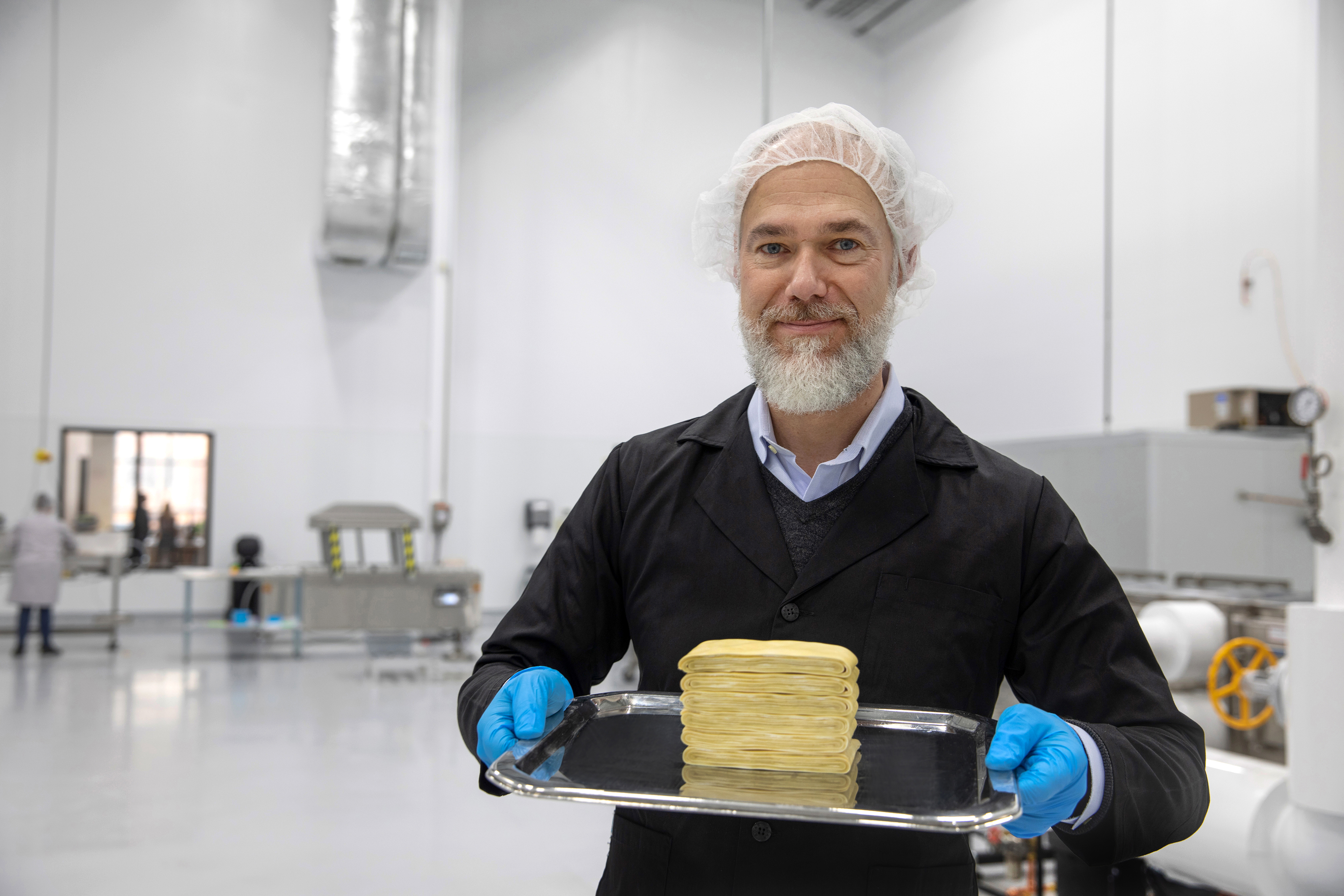
Nature’s Fynd, the food technology company with a new food offering cultivated from fungus found in the wilds of Yellowstone National Park, is releasing its first products for pre-order. 

Pitching both a non-dairy cream cheese and meatless breakfast patties, Nature’s Fynd had managed to attract some serious investors, including Al Gore’s Generation Investment Management and the Bill Gates-backed investment fund, Breakthrough Energy Ventures. The company most recently raised $80 million in its last round of funding.

The company is part of a wave of innovative products using a range of bacteria, fungi and plants to create meat alternatives. Last year, companies developing meat alternatives raised well over $1 billion in financing and investors show no sign of slowing down in their commitments to the industry.

The commercial launch of the Fy Breakfast Bundle, vegan and non-GMO alternatives to traditional breakfast products, will be the first commercial test for Nature’s Fynd as it looks to go to market.

These limited release bundles are available for $14.99 plus shipping, according to the company, and the products will be available across the 48 contiguous U.S. states.

The company’s product is grown using fermentation technology to cultivate the bacteria that Nature’s Fynd’s chief scientists discovered during their research into organisms around Yellowstone National Park.

Nature’s Fynd touts the resilience and efficiency of the microbe it discovered, leading to a more sustainable production process that uses a fraction of the land, water and energy resources that traditional animal husbandry requires, the company said.

“We choose optimism so that we can find a way to do more with less. Using our novel liquid-air surface fermentation technology, we’re creating a range of sustainable foods that nourish our bodies and nurture our planet for generations to come. We’re really excited to be at the beginning of this journey with the launch of our first-ever limited release of Fy Breakfast Bundles,” said Nature’s Fynd CEO Thomas Jonas. “We’ve deeply studied our consumers and we know that Fy’s unique versatility, which delivers great tasting meat and dairy alternatives for every occasion, is highly appealing.” 

Nature’s Fynd chief executive, Thomas Jonas. Image Credit: Nature’s Fynd

From dorm rooms to board rooms: How universities are promoting entrepreneurship

Earlier this year, 15 top U.S. universities joined forces to launch a one-stop shop where corporations and startups can discover and license patents.

Working in concert, Brown, Caltech, Columbia, Cornell, Harvard, the University of Illinois, Michigan, Northwestern, Penn, Princeton, SUNY Binghamton, UC Berkeley, UCLA, the University of Southern California and Yale formed The University Technology Licensing Program LLC (UTLP)  to create a centralized pool of licensable IP.

The UTLP arrives as more higher education institutions are beefing up their investment in the entrepreneurial pipeline to help more students launch startups after graduation. In some instances, schools serve as accelerators, providing students with resources and helping them connect with VCs to find seed funding.

To get a better look at the new program and more insight into the university-to-startup pipeline, we spoke to:


The UTLP initiative seems to be more focused on licensing IP to existing companies, rather than accelerating university startups.

Orin Herskowitz: The UTLP effort is really much more about licensing to the somewhat broken interface between universities and very large companies in the tech space when it comes to licensing intellectual property. But I know USC and Columbia and many of our peers, especially over the last three to seven years, have pivoted in a massive way to helping our faculty students fulfill their entrepreneurial dreams and launch startups around this exciting university technology.

The word “broken” jumped out at me. Historically, what has the problem been?

Orin Herskowitz: Universities have traditionally been a source of amazing, life-saving and life-improving inventions, for decades. There’s been a ton of new drugs and medical devices, cybersecurity improvements, and search engines, like Google, that have come out of universities over the years, that were federally funded and developed in the labs, and then licensed to either a startup or the industry. And that’s been great. At least over the last couple of decades, that interface has worked really, really well in some fields, but less well in others. So, in the life sciences, in energy, in advanced materials, in those industries, a lot of the time, these innovations that end up having a huge impact on society are based really on one or two or three core eureka moments. There’s like one or two patents that underlie an enormous new cancer drug, for instance.

In the tech space though, it’s a very different dynamic because, a lot of the time, these inventions are incredibly important and they do launch a whole new generation of products and services, but the problem is that a new device, like an iPhone, or a piece of software, might rely on dozens or even hundreds of innovations from across many different universities, as opposed to just one or two.

Obviously not every breakthrough necessitates the launch of a startup. I assume that the vast majority of these things that are coming would make the most sense to work with existing companies.

Jennifer Dyer: We’ve all had this renewed focus on innovation within the university and really helping our students and faculty that want to start companies, launch those companies. If you look at the space, helping educate our students that launching a company in a high-tech space may mean that they have to go out and acquire 100 different licenses, so maybe it doesn’t make sense. We’re going to be doing nonexclusive licensing, and it doesn’t preclude anyone from moving forward with this technology. This is probably the first pool for nonstandard essential patents in the high-tech space, which makes it somewhat unique. Because if you look back, most of the pools have been around standard essential patents.

The question of exclusivity is an interesting one. You wouldn’t grant exclusive rights for the right fee?

Trafi takes its mobility-as-a-service platform to LatAm, starting with Bogota

Trafi, the Lithuanian startup that created a platform that lets users plan, book and pay for various modes of transportation within a city, is expanding beyond the European market where it got its start to tackle one of the most congested urban areas in the world.

The company said it has reached an agreement to provide its mobility-as-a-service platform in Bogota, Colombia.

Trafi’s platform is a white label product. But underneath the name — whether it’s Yuomov in Zurich, Jelbi in Berlin or MVG in Munich — is the same underlying technology. The company, which operates in seven European cities, is able to capture transportation data to provide real-time route planning for users. It also handles the payment system, which helps it stand apart from some of its competitors.

Trafi doesn’t just work with cities, however. The company’s tech is also used by Google, Lyft and Gojek — to name a few.

In Bogota, the platform will pull together all the forms of public transit, including buses and trams, as well as local taxis and e-bikes. Users can use the single-payment system to book and pay for the various modes of transportation. The app includes real-time departure information, a “nearby function” that will show the user all mobility options available within their location and “intermodal routing,” which proposes combinations of up to three different modes such as taking an e-bike to the bus stop.

Trafi

Image Credits: Trafi

Bogota is just the start. Trafi co-founder and CEO Martynas Gudonavi?ius told TechCrunch that the company plans to expand to other LatAm cities. The company will target capital cities in other LatAm countries first, places like São Paulo in Brazil. Gudonavi?ius said Trafi will seek out contracts with smaller and medium-sized cities in the region as well. Any city with digital ticketing and various modes of transportation, including scooter and bicycles, buses and ride-hailing, is a good fit for the company, he added.

“Latin America is a superb example where mobility-as-a-service can really strive,” Gudonavi?ius said. “This is why we’re in Bogota, it’s this young, dynamic, fast-growing population. And we are here to help them do the big transition from transportation patterns and behavior they have at the moment, to a mobility-as-a service concept.”

Trafi is hiring for a director in the region and plans to hire more people in all departments this year. It’s also eyeing an expansion into Asia in the second half of 2021. Gudonavi?ius wouldn’t provide specific details, but said the company had a short list of cities it wanted to enter. He specifically noted that Trafi planned to expand to a city in Japan.

Jigsaw scores $3.7M to slow down your dating swipes

Chalk one up for Jigsaw, an “anti-superficial” dating app that has scored £2.7 million ($3.7 million) in seed funding to put toward U.S. expansion. The round is led by a lead generation company for online dating companies, called The Relationship Corp., with backing from angel investors in the U.S. and U.K. “primarily” in the tech sector.

As the startup’s name suggests, Jigsaw adds a little cryptic fun to the transactional business of swiping photos of other singles in search of dating chemistry in a bid to offer a less superficial experience.

Albeit their (patented) anti-superficial twist looks a tad gimmicky at first blush: They literally superimpose a digital jigsaw over the faces of users, with pieces removed gradually the more you interact — and the full face only revealed after a pre-set amount of in-app engagement.

Digital filters are also banned, per the app’s FAQ; they only want “real” selfies. So no cute cat ears, etc. 

They’ve got a few more tricks up their sleeve but don’t want to offer a public reveal of the planned features we guessed were coming just yet (but, well, a quick glance at the app and it’s basically a half finished jigsaw puzzle of their product roadmap).

The U.K. startup — which was founded back in 2016 by a couple of friends, Alex Durrant (co-founder and CEO) and Max Adamski (co-founder and CPO), when they were at university (and finding the dating app scene frustratingly superficial, as they tell it, going on to quit their jobs and go all in on the project in 2018) — launched its puzzle-faced dating experience in London in 2019; and opened up to the U.S. in November last year.

Jigsaw has some 150,000+ registered users across those two markets at this point, with 50,000 in the U.S. — and an appetite to step things up over the pond now that they’re flush with new funds.

Durrant says the team is hoping to hit half a million U.S. users in the next six months. They reckon there’s a trend toward less superficial swiping in the American dating app scene that Jigsaw is well-positioned to tap into.

“We’re not insane and think people look better with puzzles over their faces, I promise, the puzzle is our middle finger to the superficial dating industry,” he says. “It exists as you say to encourage more meaningful/sustained interactions and to help users look beyond the looks.”

Currently, Jigsaw’s face-shielding mechanism involves a puzzle made up of 16 pieces. All photos start with one piece removed “so you get a sneak peek”. Another then comes off when a user likes (matches with) the person so at the start of chatting there are two pieces revealed.

More pieces are removed as the pair mutually exchange messages until there’s no more puzzle bits left. Hopefully you also won’t run out of conversation at that point.

“Over six messages each (12 in total) is what we believe is the minimum needed for a meaningful conversation,” says Durrant. “That’s why the jigsaw puzzle currently unveils fully after seven messages are exchanged (14 pieces revealed in total), revealing the face underneath. This number has been tested and this is the current sweet spot for our users.”

Jigsaw isn’t unique in the concept of shielding facial visuals to encourage dating app users to do more chatting and less mindless swiping. There are a whole bunch of “slower reveal” style twists aimed at reducing “dating app fatigue” — as another app, INYN, which also limits the velocity of the profile reveal, puts it.

Another app which blurs users’ photos until they do some chatting is Taffy. There’s also Muslim matchmaking app Veil — which offers a “digital veil” feature (aka an opaque filter) that it applies to all profile photos, male and female, until a mutual match is made.

Other “anti-superficial” dating apps, like Willow, try a Q&A style approach — getting users to answer questions to see more photos. The list goes on.

Still, Jigsaw has come up with perhaps the most visually obvious (and gamified) twist on this slow-reveal format. And being so immediately, well, obvious, it might make its “slow reveal” twist stick for longer than the average “love is blind” alternative dating app.

Its seed investment is not about buying users, either. We made sure to check.

The Relationship Corp. does offer user acquisition/traffic generation services to dating apps — including those it invests in — but in Jigsaw’s case the investment is a straight equity investment, per Durrant. So it’s at least sounding confident in its ability to grow.

“They’re super low-key but are known in the industry,” says Durrant of the lead seed investor. “Steve Happas their CEO is ex-Match and… sits on our advisory board [as part of the investment]. We had an option to work with them to acquire users but instead, they are supporting our internal team in an advisory capacity.”

Parler crawls back online empty and with a Tea Party CEO

Parler, a social network adopted by the far right and recently kicked off AWS for its userbase’s habit of advocating violence, is back online. The restoration questions the notion that “big tech” can take and keep an unwanted presence offline, but Parler’s return is not quite a triumph, and its new CEO doesn’t suggest much of a change in philosophy.

Users can now log in to Parler on the web, but when they do they will find that all their old posts and content have been removed. It’s unclear whether this was a consequence of the hurried exit from AWS last month, a scorched-earth policy regarding the content that got the site in hot water in the first place or for some other reason.

Fortunately someone had the presence of mind to make a backup, though not with the intention of restoring it. @donk_enby scraped millions of posts and media files from the site for posterity, something that has already borne fruit as researchers have used the files to show, for example, where certain users were on the day of the Capitol riots. (She is currently pointing out various problems with the new Parler’s web rollout.)

The new site is described in a statement as using “sustainable, independent technology and not reliant on so-called ‘Big Tech’ for its operations.” The new host is SkySilk, seemingly a reseller of OVHcloud, and I’ve asked if the company plans to enforce its terms, which generally but not specifically prohibit things like threats of violence. (The details of the terms violations were made more public in Parler’s attempt to force Amazon to reinstate it.)

Update: SkySilk has issued a statement explaining that it is hosting Parler because of its position on free speech, which reads in part:

Skysilk does not advocate nor condone hate, rather, it advocates the right to private judgment and rejects the role of being the judge, jury, and executioner. Unfortunately, too many of our fellow technology providers seem to differ in their position on this subject.

SkySilk truly believes and supports the freedom of speech and more specifically the rights afforded to us in the First Amendment. This is a non-negotiable issue for us. And while we may disagree with some of the sentiment found on the Parler platform, we cannot allow first amendment rights to be hampered or restricted by anyone or any organization.

SkySilk will support Parler in their efforts to be a nonpartisan Public Square as we are convinced this is the only appropriate course of action.

Parler, for its part, aims to make itself a bit less of an easy target by upping its moderation game. The site will supposedly be using both AI and human moderators to watch for content that could rock the boat — though Facebook has been trying this for years and still hasn’t quite got the hang of it.

They may have an easier job of it, considering Parler is still barred from the Google Play Store and iOS App Store. That’s a huge damper on activity, since mobile users make up a large part of social networks. So the flood of content the site could not adequately monitor in early January may have slowed to a trickle. (I’ve asked the company for more information on this and other matters and will update this post if I hear back.)

Meanwhile, the operation is being overseen by a new interim CEO after the ouster of John Matze by the board. The one to fill the role is Mark Meckler, founder of the Tea Party Patriots, staunch opponents of Obamacare and big fans of debunked COVID-19 treatment hydroxychloroquine. The group was also behind the infamous “America’s Frontline Doctors” event and was one of the organizers of the March to Save America that turned into the Capitol Riots.

Meckler’s pedigree suggests that despite the claimed moderation improvements, this is hardly Parler turning a new leaf, and SkySilk may be disappointed that its “nonpartisan public square” will be led by a hyperpartisan conservative activist (and is funded and populated by same). With the deliberate (and apparently unavoidable) break with “Big Tech,” however it is defined, and a CEO who embodies the same qualities that ran amok before, it seems a lot more like stubborn defiance than introspection and graceful compromise.

Delivery company goPuff is in talks to acquire the UK’s Fancy

GoPuff, the U.S.-based startup that operates its own “microfulfillment” network and promises to deliver items such as over-the-counter medicine, baby food and alcohol in 30 minutes or less, is in talks to acquire the U.K.’s Fancy Delivery, TechCrunch has learned.

According to sources, terms of the acquisition are still being fleshed out, and the deal has yet to get over the line. However, an announcement could come in the next few weeks if not sooner. GoPuff declined to comment. Fancy’s founders couldn’t be reached before publication, either.

Launched late last year, Fancy currently operates in four cities in the U.K. and is a graduate of the Silicon Valley accelerator Y Combinator. It has a strikingly similar model to its potential buyer, leading some to describe it as a mini goPuff. The two companies are fully vertically integrated, meaning they each contract their own fleet of drivers and operate their own microfulfillment centres — sometimes dubbed “dark stores” — designed specifically for online ordering and hyperlocal delivery.

Strategically, the potential acquisition of Fancy looks to be a good fit, and most notably would signal goPuff’s intent to expand to the U.K. via purchasing a nascent local player rather than starting entirely from scratch. Sources tell me Fancy will continue to operate under the Fancy brand and that goPuff intends to invest in its growth, including hiring and opening additional fulfillment centers. One source tells TechCrunch the acquisition will be an all-stock deal.

GoPuff was recently valued at $3.9 billion and has raised $1.35 billion in funding to-date (backers include Accel, D1 Capital Partners, Luxor Capital and SoftBank Vision Fund). It already operates in 500 U.S. cities, and isn’t shy of making acquisitions, either, most recently purchasing alcohol-focussed BevMo.

Meanwhile, Europe is seeing a slew of startups inspired by goPuff’s vertically integrated model sprouting up. They include Berlin’s much-hyped Gorillas and London’s Dija and Weezy, and France’s Cajoo, all of which claim to focus more on fresh food and groceries, where margins are arguably tighter. There’s also the likes of Zapp, which is still in stealth and more focused on a higher-margin convenience store offering.

Severe weather, blackouts show the grid’s biggest problem is infrastructure, not renewables

It’s becoming harder for the U.S. to ignore the very real effects of global climate change — and despite the efforts of naysayers, it’s not a push to renewables that’s to blame for the outages sweeping the nation. It’s the country’s energy infrastructure.

Severe weather conditions caused by global warming have now caused massive blackouts across some of the largest cities in the United States. The inability of the U.S. power grid to withstand the stresses caused by extreme weather events shows that the nation needs a massive investment plan to upgrade energy infrastructure in an effort to make it more resilient.

These problems are now painfully apparent to the 29 million residents of Texas who are now subject to rolling blackouts caused by the frigid weather sweeping across the country.

The Electric Reliability Council of Texas said it had “entered emergency conditions and initiated rotating outages at 1:25 a.m. today,” in a statement. The Texas grid shed 10.5 gigawatts of load — or enough to power 2 million homes at its peak.

“Extreme weather conditions caused many generating units – across fuel types – to trip offline and become unavailable,” the energy provider said in a statement.

Part of the problem lies with natural gas generators that supply much of the power to the grid in Texas, according to Princeton professor Jesse Jenkins, who has a joint appointment in the Department of Mechanical and Aerospace Engineering and the Andlinger Center for Energy and Environment.

Citing a market participant, Jenkins noted on Twitter that roughly 26 gigawatts of thermal energy is offline because natural gas is being diverted to provide heat instead of power. Only about 4 gigawatts of wind is offline because of icing, Jenkins noted.

Confidential info from a market participant in ERCOT: As of ~10 AM Eastern time, the system has ~30 GW of capacity offline, ~26 GW of thermal — mostly natural gas which cant get fuel deliveries which are being priorities for heating loads — and ~4 GW of wind due to icing. https://t.co/Bfpn0WeRIq

— JesseJenkins (@JesseJenkins) February 15, 2021

The current blackouts have nothing to do with renewables and everything to do with cold weather slowing down natural gas production because of freeze-offs and spiking demand for heating at the same time.

As Dr. Emily Grubert, an assistant professor of Civil and Environmental Engineering and, by courtesy, of Public Policy at the Georgia Institute of Technology, noted, the problem is more of a total systems issue than one associated with renewable power.

“Let us be absolutely clear: if there are grid failures today, it shows the existing (largely fossil-based) system cannot handle these conditions either,” Grubert wrote on Twitter. “These are scary, climate change-affected conditions that pose extreme challenges to the grid. We are likely to continue to see situations like this where our existing system cannot easily handle them. Any electricity system needs to make massive adaptive improvements.”

Renewable energy and energy storage can potentially provide a solution to the problem and help contribute to a more resilient grid. Residential energy developer Swell Energy raised $450 million in financing late last year to begin development of several projects across three states that would pair distributed, residential solar energy generation with battery storage to create what are called virtual power plants that can ease stress on energy grids in times of increased demand.

“Utilities are increasingly looking to distributed energy resources as valuable ‘grid edge’ assets,” said Suleman Khan, CEO of Swell Energy, in a statement, at the time of the announcement. “By networking these individual homes and businesses into virtual power plants, Swell is able to bring down the cost of ownership for its customers and help utilities manage demand across their electric grids.”

Other companies, like Evolve Energy or Griddy, try to help consumers manage costs by charging them wholesale rates for power. Those companies can only be economical when the rates for wholesale power are low. Right now, with demand for power skyrocketing, prices for energy in the ERCOT have surged above $5,000 per MW and hit the $9,000 cap in many nodes, according to Bloomberg Energy reporter Javier Bias.

The blackouts in Texas today and in California in January show that the current grid in the United States needs an overhaul. Whether it’s heavily regulated markets like California or a free market like Texas, current policy can’t stop the weather from wreaking havoc and putting people’s lives at risk.


Private equity firm Marlin snatches up e-commerce optimization platform Lengow

French startup Lengow has a new landlord as Marlin Equity Partners has acquired a majority stake in the company. Lengow operates a software-as-a-service platform to optimize e-commerce listings. Terms of the deal are undisclosed.

In particular, many sellers now list their items on multiple e-commerce websites at once. For instance, a company could have its own e-commerce website and also sell products on Amazon, eBay, etc. And you may have noticed the same third-party sellers on different marketplaces.

Manually listing items across multiple e-commerce platforms would be extremely tedious. Behind the scenes, Lengow tries to automate as many steps as possible. First, you can import your products by connecting Lengow with your product information management system (PIM) or your e-commerce back end — it can run on Akeneo, Shopify, Magento, WooCommerce, etc.

You can then publish your products on multiple sales channels at once. It can be a marketplace, a price comparison website, a social network or an adtech platform. Examples include Amazon, Google Shopping, Criteo, Instagram, etc.

Lengow also helps you track orders, create rules when you’re running low on stock and manage your advertising strategy. Essentially, it’s the glue that makes all the moving parts of e-commerce stick together. There are 4,600 merchants using Lengow globally.

Marlin describes the deal as a growth investment. The firm plans to increase the value of Lengow in the coming years as it hasn’t reached its full potential yet. “We are looking forward to leveraging our operational and financial resources to support Lengow’s growth trajectory and continued international expansion,” Marlin principal Roland Pezzutto said in a statement.