Senate antitrust hearing on app stores gives Apple critics a big soapbox

The latest hearing to target Big Tech will drill down on competition in Apple’s App Store and Google Play. The Senate hearing, set for Wednesday at 2:30 p,m. EDT and embedded below, will feature testimony from the two big app store gatekeepers, and three companies that have banded together to critique the immense power that Apple and Google command in the mobile software market.

Last year, 13 app makers created the Coalition for App Fairness, a group organizing against Apple in particular for its stranglehold over app distribution and the hefty fees it collects from software developers. The group is linked to legislation in states like North Dakota that seeks to make state laws more more favorable to software makers by removing app store fees and has expanded since its inception.

Spotify, Tile and Match Group (which owns Tinder, Hinge and other dating apps) are all members of the coalition and will be testifying in the Senate antitrust subcommittee hearing Wednesday. That committee is helmed by Sen. Amy Klobuchar (D-MN), an emerging tech antitrust hawk who’s made reining in Big Tech’s power a cornerstone of her political brand.

No tech CEOs will be giving testimony this time around — they’ve sent legal counsel instead — but the dynamic might be interesting given that the two Big Tech companies will appear alongside their fierce critics, who are aligned with the lawmakers who called the hearing.

The hearing comes a day after Apple launched AirTags, its own Tile-like product that can geolocate lost items like keys and wallets. Tile has criticized Apple for more than a year over those plans, claiming the tech giant implemented policies to hamstring the market leader in a product category it planned to compete within. The company previously testified before the House’s antitrust subcommittee, airing those concerns last January.

“We welcome competition, as long as it is fair competition,” Tile CEO C.J. Prober said Tuesday following Apple’s big event. “Unfortunately, given Apple’s well-documented history of using its platform advantage to unfairly limit competition for its products, we’re skeptical.”

Prober called lawmakers’ interest in examining Apple’s policies “entirely appropriate” in light of Tile’s history of issues with the company.

Software makers have long been waging a battle against Apple over its iron grip on the app world. Last year, Epic elevated that struggle, picking a fight with Apple over the 30% cut the company takes on payments made through its App Store. Apple punished the company for its attempt at a workaround for the fees, kicking Epic’s hit game Fortnite out of the App Store and prompting Epic to launch an antitrust suit against the $2 trillion company. Epic’s day in court kicks off next month, on May 3.

Google launches the next developer preview of Android 12

Right on schedule, Google today launched the third developer preview of Android 12, the latest version of its mobile operating system. According to Google’s roadmap, this will be the last developer preview before Android 12 goes into beta, which is typically also when you’ll likely see the first over-the-air updates for nondevelopers who want to try it out. For now, developers still have to flash a device image to their supported Pixel devices.

Google notes that with the beta phase coming up, now is the time for developers to start compatibility testing to make sure their apps are ready. Currently, the plan is for Android 12 to reach platform stability by August 2021. At that point, all the app-facing features will be locked in and finalized.

So what’s new in this preview? As usual, there are dozens of smaller new features, tweaks and changes, but the highlights this time around are the ability for developers to provide new haptic feedback experiences in their apps and new app launch animations.

This new app launch experience may be the most noticeable change here for both developers and users. The new animation will take the app from launch to a splash screen that shows the app’s icon and then to the app itself. “The new experience brings standard design elements to every app launch, but we’ve also made it customizable so apps can maintain their unique branding,” Google explains. Developers will get quite a bit of leeway in how they want to customize this splash screen with their own branding. The most basic launch experience is enabled by default, though.

Rich haptic feedback is also new in this release. It’s hard not to look at this and think of Apple’s now mostly abandoned Force Touch, but this is a bit different. The idea here is to provide “immersive and delightful effects for gaming, and attentional haptics for productivity.”

Other new features in this release include a new call notification template that is meant to make it easier for users to manage incoming and ongoing calls. Google says these new notifications will be more visible and scannable. There are also improvements to the Neural Networks API for machine learning workloads and new APIs to support a wider range of ultra high-resolution camera sensors.

With Android 12, Google is also deprecating its RenderScript API for running computationally intensive tasks in favor of GPU compute frameworks like Vulkan and OpenGL.

You can find a full breakdown of all of the changes in this release here.

Affect raises a seed round to grow its stimulant abuse recovery service

There are any number of seed rounds that cross our desks every day, a never-ending march of enterprise software, consumer apps, games, hardware, biotech and sometimes even a space startup. But amid the regular flow of funding news, it’s still rare to come across a company raising money to take on addiction with software. So when Affect’s $1 million seed round from AlleyCorp came to my attention, I wanted to learn a bit more.

As someone who went to rehab for alcohol use disorder in what appeared to be a partially renovated middle school where the highest-tech thing that was in our group rooms were chairs, the idea of using software to help addicts reduce use and get their life back intrigued me.

Focused on stimulant abuse in particular, the startup wants to help people addicted to methamphetamine, for example, fully cease their use of the drug. Affect CEO Kristin Muhlner talked me through the company’s efforts during an interview. In short, the Affect app combines contingency management (rewards for positive behaviors) and cognitive behavioral therapy, or CBT (a form of therapy with known impact on addiction). Regarding the latter, Muhlner told TechCrunch during an interview that well-known recovery programs like AA or SMART Recovery also use forms of CBT in their approaches to helping addicts.

In app form, those two concepts break down into things like cash rewards for multiday abstinence or attending a group session. On the therapy front, Affect offers group therapy, individual therapy, addiction counseling and drug testing.

Like many companies today, Affect intends to learn from more data; it expects, per a deck that TechCrunch was able to review, machine learning to help the company hone its model and service over time. Let’s hope.

Critically, Affect is not opposed to medically assisted recovery, which matters. There is, in some recovery-focused theologies, a belief that any sort of medical assistance is akin to merely replacing one addiction, or substance, with another. This harmful view is contradicted by science. So, to see Affect cite adjuvant medication in its own pitch materials was heartening.

Stimulant abuse is rampant in America, and meth addiction is among the most deadly drugs in the country. Meth is no fucking joke. The only good amount of meth usage is precisely and exactly zero meth usage. So what Affect is building could actually change the world for stimulant addicts if it works.

I honestly hope Affect company winds up raising a bit more to more fully test out its thesis regarding addiction recovery. With insurance companies picking up the tab for Affect’s software, it has a chance to reach lots of folks in need. So many, in fact, that when I asked its CEO how it was handling go-to-market work, she said that her company had been warned that her user group was hard to reach. However, after putting up a digital ad, her company had to take it down seven minutes later. How’s that for product-market fit.

Let’s hope we see more startups working on this problem. Addiction is not going away and older methods are not the only way forward for addicts.

Figma introduces a whiteboard tool called FigJam

Figma spent years in stealth before launching its web-based collaborative design tool. Since coming into the light, the company has been iterating quickly. Today, Figma launches its biggest product update to date.

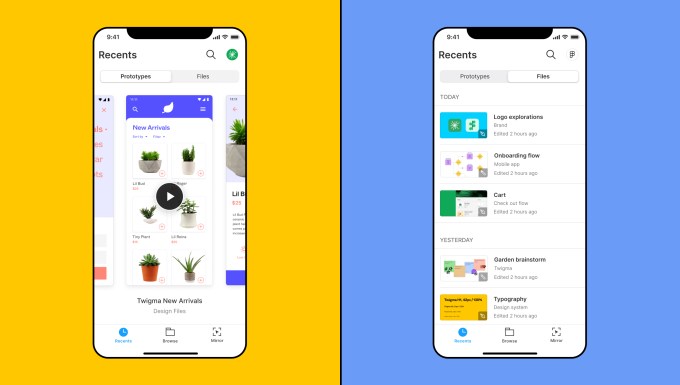
Meet FigJam, Figma’s new whiteboarding tool.

The entire concept of Figma stemmed from the fact that designers were taking up much more space at the figurative table and needed a place to collaborate efficiently. That is only more true today, especially during the last year of working from home, which is why Figma is extending itself throughout the workflow of designers with whiteboarding.

Not only does FigJam give designers a place to come up with ideas together, but it also gives nondesigners a place to participate in the brainstorm.

FigJam functionality includes sticky notes, emojis and drawing tools, as well as shapes, pre-built lines and connectors, stamps and cursor chats. As expected, FigJam works with Figma so components or other design objects breathed into life on FigJam can easily be moved into Figma.

“Our point of view here was focusing on how to make FigJam work as the first step in the design process, before you go into actually doing design work,” said Figma founder and CEO Dylan Field. “We see people looking for a better, more fluid experience, but we also wanted to make it simple enough to bring other people into the tool.”

To take that a step further, Figma is also introducing voice chat into all of its products. That means users who are designing alongside one another in Figma or brainstorming in FigJam don’t need to hop into a separate Zoom call or Google Meet, but can just toggle on chat in Figma to use audio.

Figma didn’t build its voice chat from scratch, but rather worked with a partner to bring this to market. Figma did not specify which partner/tech it’s working with on voice chat.

Alongside the release of FigJam and voice chat, Figma is also releasing a more full-featured mobile app, which will be in beta through TestFlight at launch.

Image Credits: Figma

One final update that Figma is announcing today is branching and merging in Figma. This allows designers who are updating the design system, for example, to branch out and do their work and then merge that work with the existing design system, rather than updating a shared component or resource and affecting everyone else’s workflow.

‘Conscience laws’ endanger patients and contradict health tech’s core values

Lena Levin
Contributor

Lena Levin is co-founder and CEO of Via Surgical, a leading developer of novel surgical fixation solutions.

Recent laws allowing healthcare providers to refuse care because of conscientious beliefs and denying care to transgender individuals might not seem like an issue for the tech industry at first blush, but these types of legislation directly contradict the core values of health tech.

Arkansas Governor Asa Hutchinson last month signed into law S.B. 289, known as the “Medical Ethics and Diversity Act,” which allows anyone who provides healthcare services — not just doctors — to refuse to give non-emergency care if they believe the care goes against their conscience.

Arkansas is one of several states in the U.S. that have been pushing laws like this over the past several years. These “conscience laws” are harmful to all patients — particularly LGBTQ individuals, women and rural citizens — especially because over 40% of available hospital beds are controlled by Catholic institutions in some states.

While disguised as a safeguard that prevents doctors from having to participate in medical services that are at odds with their religious beliefs, these laws go far beyond that and should be repealed.

While disguised as a safeguard that prevents doctors from having to participate in medical services that are at odds with their religious beliefs, these laws go far beyond that and should be repealed.

“Non-emergency” service is open to interpretation

The Arkansas legislation is one giant slippery slope. Even beyond the direct effects that the law would have on reproductive rights and the LGBTQ community, it leaves open questions about the many different services that medical professionals could decline simply by saying it goes against their conscience.

Broadly letting healthcare providers decide which services they will perform based on religion, ethics or conscience essentially eliminates protections patients have under federal anti-discrimination regulations.

What constitutes an “emergency” to one doctor or EMT may be deemed a “non-emergency” by another. By allowing medical professionals to avoid performing some services, the bill can be interpreted as allowing anyone involved in the provision of healthcare services to avoid performing any kind of service, as long as they say they believed it wasn’t an emergency at the time.

The law also allows individuals to refuse to refer patients to someone who would provide the desired service for them. This places an undue burden on patients with physical or mental health issues and causes delays in treatment as the patient searches for an alternate provider. In cases of health and life-threatening issues, for example, women have been refused treatment at Catholic medical institutions and forced to ride to the closest emergency care center.

The health tech community is working to improve the health of all

The Arkansas law runs counter to the values of the businesses that are working hard to develop and improve medical technologies. Health tech startups at their core are fighting to provide more and better services to more patients — whether it’s by building platforms to make healthcare accessible to all, developing specific medical devices to improve the quality of service or researching new treatments and vaccines.

Imagine developing a vaccine for a global pandemic and then allowing doctors the right to refuse to administer it because it’s open to interpretation whether the virus represents an emergency to specific people. Or imagine a hospital pharmacist who deliberately tries to spoil hundreds of vaccine doses because of the conspiracy theories he believes. Laws like the one in Arkansas open up the healthcare system to abuse by conspiracy theorists, and it is already the case that many wellness providers are basing their advice and services on QAnon falsehoods.

The health tech community is not just developing medications and devices for patients whose beliefs are similar to their own. Equally, medical professionals should not be making it harder for people to get needed medical care based on personal feelings. On the contrary, the ultimate goal of health tech businesses and healthcare providers alike should be a singular focus on improving the quality of care for all.

“Medical ethics” and anti-LGBTQ laws are unethical

As the health tech community continues to work tirelessly to bring new solutions to the marketplace to improve the health of everyone, it must also stand against laws like this, which threaten to eradicate the important gains that have been made in enhancing the lives and health of patients.

The Arkansas law — and others like it — place the burden of finding appropriate care on the patient instead of on the medical community, where it belongs. These laws must be repealed.

Foxconn’s Wisconsin factory plans scaled back dramatically

It was “the eighth wonder of the world,” Donald Trump said, driving a golden shovel into the ground. The then-president touted Foxconn’s planned Wisconsin factory as a major win for his economic goals.

A year and a half later, the future of the manufacturing deal is far less certain. Earlier this week, the state announced a dramatic scaling back of a plan it had hoped would return blue-collar jobs back to the hard hit state. The Taiwanese manufacturing giant is scaling back its investment from $10 billion to $672 million.

The new plans also call for a massive cut to potential headcount — to 1,454, down from 13,000. Wisconsin Governor Tony Evers framed the reduction as a tax-saving deal in a press release issued this week.

“When I ran to be governor, I made a promise to work with Foxconn to cut a better deal for our state—the last deal didn’t work for Wisconsin, and that doesn’t work for me,” Evers said. “Today I’m delivering on that promise with an agreement that treats Foxconn like any other business and will save taxpayers $2.77 billion, protect the hundreds of millions of dollars in infrastructure investments the state and local communities have already made, and ensure there’s accountability for creating the jobs promised.”

Evers stepped into the role of Governor in 2019, following Scott Walker, who played a key role in negotiating the deal under Trump. The package included in the neighborhood of $4 billion in incentives for Foxconn, a record-breaking deal for the firm.

Plans for the TV factory shifted considerably since it was announced nearly four years ago, and in early 2019, it appeared that Foxconn had abandoned it altogether, before a phone call from Trump apparently put plans back on track.

As Reuters notes, the state has already spent in excess of $200 million on infrastructure, training and other aspects ahead of the planned factory opening.


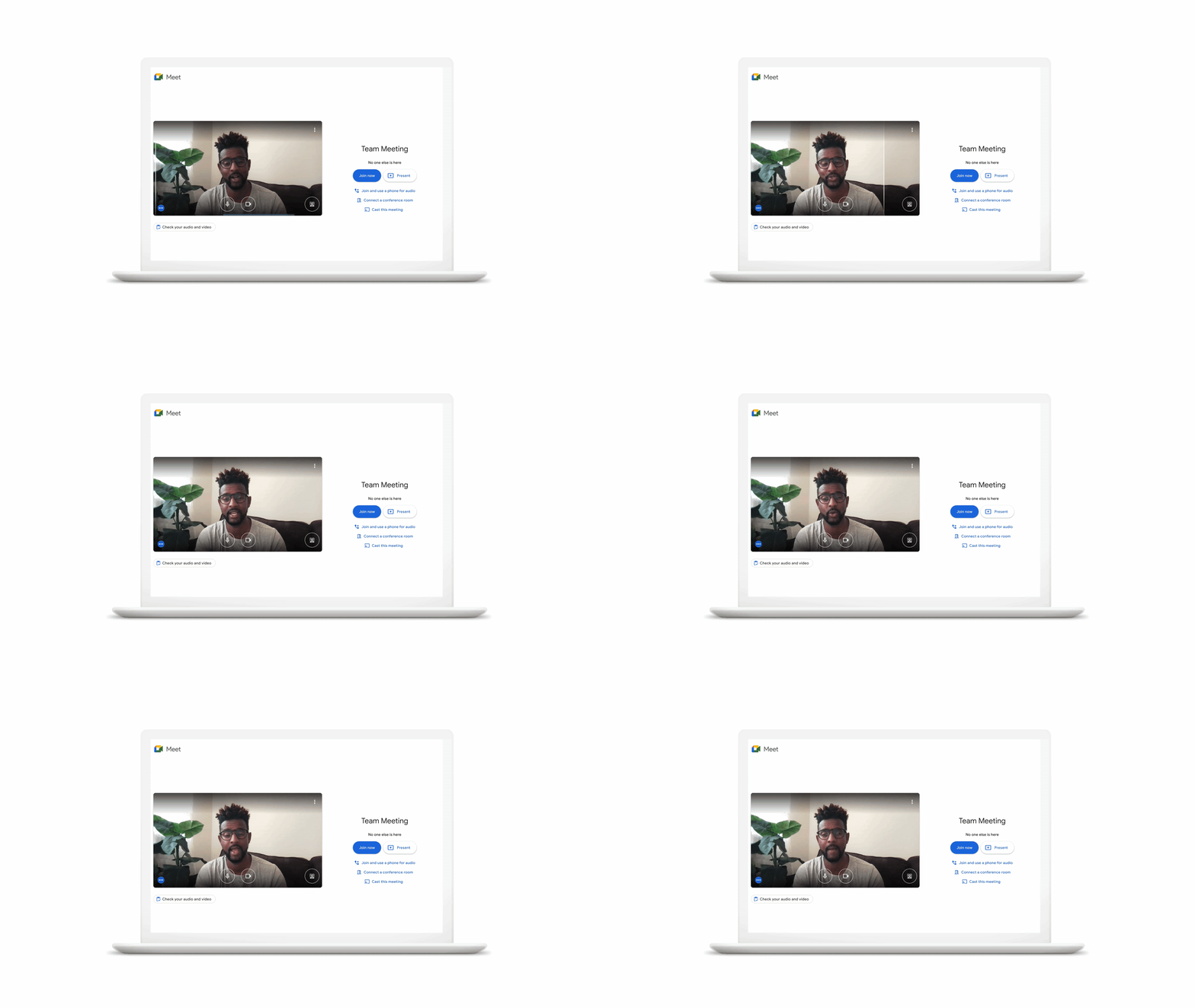
Google Meet gets a refreshed UI, multipinning, autozoom and more

Google today announced a major update to Meet, its video-meeting service, which brings several user interface tweaks for desktop users, as well as quite a bit of new functionality, including multipinning so that you can highlight multiple feeds instead of just one, as well as new AI-driven video capabilities for light adjustments, autozoom and a new Data Saver feature that limits data usage on slower mobile networks.

If you’re anything like me, you’re increasingly tired of video meetings (to the point where I often just keep the camera off). But the reality is that this style of meeting will be with us for the foreseeable future, whether we like them or not.

Image Credits: Google

Google notes that today’s release is meant to make meetings “more immersive, inclusive and productive.” The new UI doesn’t look to be a radical change, but it puts more of the controls and features right at your fingertips instead of hiding them in a menu. It also consolidates them in the bottom row instead of the current system that spreads out features between the main menu bar and an additional small menu at the top.

For presenters who don’t want to see themselves on the screen, Meet now also lets you minimize or completely hide your own video feed — and if you really want to glance into your own eyes, you can also pin your feed to the rest of the grid. Google says it also plans to soon let you turn off your self-feed across all Meet calls.

Image Credits: Google

Talking about pinning, one feature that seems especially useful is the ability to highlight multiple feeds. This new multipinning capability will make it easier to focus on the participants in a chat that are most active, for example. This feature will roll out in the coming months.

And coming in a few months, some of those highlighted feeds may look a bit more interesting (or annoying, depending on your point of view) because one new feature Google has planned — but isn’t ready to roll out yet — is video background replacement. For now, Google will only offer three scenes: a classroom, a party and a forest. The company says more will follow, but it doesn’t look like you’ll be able to bring your own videos to this feature anytime soon.

Image Credits: Google

Other new features in this release include Meet’s capability to automatically spruce up your video feed a bit to make sure you’re more visible in a dark environment and enhance your video when you are sitting in front of a bright background. This will roll out in the coming weeks. There’s also autozoom, which uses AI to automatically zoom in on you and put you in the middle of your frame. That’s coming to paid Google Workspace subscribers in the coming months.

Creator+ raises $12M to build a film studio and streaming service focused on digital storytellers

In the words of co-founder and CEO Jonathan Shambroom, Creator+ is a new startup that will “finance, produce and distribute feature-length films from today’s top creators and emerging storytellers.”

The company is coming out of stealth today and also announcing that it has raised $12 million in funding led by Petra Group and Freestyle Capital, with participation from Jake Roper, Peter Hollens, Wendy Ayche (aka Wengie), Selina Tobaccowala, Jazwares CEO Judd Zebersky and others.

Shambroom (who’s been an executive at numerous startups and also served as general manager at Crackle) told me that one of the key aspects of the Creator+ strategy is that it controls “both sides of the equation” — it’s both producing films and building its own streaming platform, where the movies will be available for individual purchase, with no subscriptions and no ads.

He said that allows the startup to control costs and distribution, but it also “enables us to do something brand new with creators,” giving them a 50-50 split on revenue, as well as sharing audience data and ownership of the intellectual property.

“Creator” is a term that gets used pretty broadly, and Creator+ isn’t announcing any specific deals today. But co-founder and Chief Strategy Officer Benjamin Grubbs (who previously led creator partnerships at YouTube) told me the company is initially focused on “storytellers and artists.”

“We recognize that there are a lot of gifted storytellers on some of these large, open, ad-supported platforms where they already reach large audiences and fan bases,” Grubbs said. “But there are constraints, whether that’s time-based or economic, on the types of stories that you can actually tell.”

So Creator+ will allow those creators to break free of some of those constraints, making feature films with budgets in the low seven figures. Shambroom said the startup wants to deliver “what people expect in a film, 90 minutes give-or-take … in many of the genres that exist today” while also allowing creators to experiment with new formats and new production technologies. In some cases, these movies could be a creator’s “passion project,” while in other cases Creator+ could match them up with the right script.

“We see a multitude of roles and opportunities for creators, both in front of or behind the camera,” Grubbs added.

Creator+ plans to put between five and 10 films into production this year, with the first titles released in 2022. Shambroom said it’s committed to supporting underrepresented storytellers and has already hired Ben O’Keefe as its head of diversity and impact. The team also has global ambitions, which is why they brought on international investors, including Malaysia-based Petra Group.

4 ways martech will shift in 2021

Tim Parkin
Contributor

Tim Parkin, president of Parkin Consulting, is a consultant, advisor, and coach to marketing executives globally. He specializes in helping marketing teams optimize performance, accelerate growth, and maximize their results.

The tidal wave of growth is upon us — an unprecedented economic boom that will manifest later this year, bringing significant investments, acquisitions and customer growth. But most tech companies and startups are not adequately prepared to capitalize on the opportunity that lies ahead.

Here’s how marketing in tech will shift — and what you need to know to reach more customers and accelerate growth in 2021.

First and foremost, differentiation is going to be imperative. It’s already hard enough to stand out and get noticed, and it’s about to get much more difficult as new companies emerge and investments and budgets balloon in the latter half of the year. Virtually all major companies are increasing budgets to pre-pandemic levels, but will delay those investments until the second half of the year. This will result in an increased intensity of competition that will drown out any undifferentiated players.

The second half of 2021 will bring incredible growth, the likes of which we haven’t seen in a long time.

Additionally, tech companies need to be mindful not to ignore the most important part of the ecosystem: people. Technology will only take you so far, and it’s not going to be enough to survive the competition. Marketing is about people, including your customers, team, partners, investors and the broader community.

Understanding who your people are and how you can use their help to build a strong foundation and drive exponential growth is essential.

Tactically, the most successful tech companies will embrace video and experimentation in their marketing — two components that will catapult them ahead of the competition.

Ignoring these predictions, backed by empirical evidence, will be detrimental and devastating. Fasten your seatbelts: 2021 is going to be a turbocharged year of growth opportunities for marketing in tech.

Differentiation is crucial

The explosion of tech companies and startups seeking to be the next big thing isn’t over yet. However, many of them are indistinguishable from each other and lack a compelling value proposition. Just one look at the websites of new and existing tech companies will reveal a proliferation of buzzwords and conceptual illustrations, leaving them all looking and sounding alike.

The tech companies that succeed are those that embrace one of the fundamentals of effective marketing — positioning.

In the ’80s, Al Ries and Jack Trout published “Positioning: The Battle For Your Mind” and coined the term, which documented the best-known approach to standing out in a noisy marketplace. As the market heats up, companies will realize the need to sharpen their positioning and dial in their focus to break through the noise.

To get attention and build traction, companies need to establish a position they can own. The mashup method — “Netflix but for coding lessons” — is not real positioning; it’s simply a lazy gimmick.

It is imperative to identify who your ideal customer is and not just who could use your product. Focusing on a segment of the market rather than the whole is, perhaps counterintuitively, the most effective approach to capturing the larger market.

Gett inks deal with Curb Mobility to bring yellow cabs to its enterprise-focused on-demand ride-hailing app

Gett, the ride-hailing startup that has been carving out a niche for itself in a crowded and competitive market for on-demand transportation by focusing on enterprise accounts and connecting people with rides in some 1,500 cities leveraging a number of third-party fleets, is adding another partner today as it continues to double down on its business model in the wake of corporate travel slowly coming back online.

Gett has inked a deal to integrate Curb Mobility to integrate yellow taxis into Gett’s app, which will now cover some 65 cities across the US. The news is coming at a time when Gett is looking to expand its service to meet more demand: it notes that rides currently at around 80% of the levels they were in Q1 2020, just ahead of Covid-19 really descending on the western world.

From what we understand, the deal does not involve any investment between Gett — which has raised around $865 million to date (including most recently closing a $115 million round) and was last valued at $1.5 billion in 2019 — and Curb — which is a part of Verifone, after the payments hardware company acquired it in 2015.

(If you think it sounds odd for a payments hardware company to own a taxi fleet app, this is only part of Curb’s business and is in fact also a hardware player: in addition to Curb providing a way to hail yellow taxis — it app covers some 50,000 cabs and 100,000 drivers — the company also builds hardware for cabs and fleet operations, including metering apps, payment terminals, and those interactive screens for passengers that let them pay for rides, watch news and advertisements and more.)

To differentiate its service from the very highly capitalized Ubers and Lyfts of the world, Gett has been building out a two-pronged strategy that covers both how it scales, and the services that it provides to its users.

On the scaling front, Gett has been moving away from managing fleets of contractor drivers in the US for some years now: back in 2019, after slogging it out for years against Lyft and Uber in its primary New York metro market, Gett effectively shut down its main fleet operation in the region and instead inked a deal with Lyft. That has become a template of sorts that the company has been repeating in other cities outside of the U.S. where it doesn’t have substantial market share. (For example, Ola is another Gett partner.) In some cities where it has a larger footprint, like London and Moscow, Gett works with drivers directly.

Partner fleets made up one-third of Gett’s business in the first quarter of this year, but as Gett brings on more to its network, it expects partner fleets to cover the majority of its rides by the end of this year, the company said.

On the service front, Gett has made a big bet on building a platform that integrates with businesses at the back end to make it easier to order rides and for them to reconcile more easily with a businesses expense management and accounting software. Gett’s big pitch to would-be customers is that this software makes it less expensive and significantly more efficient to hail a cab using Gett compared to the alternatives — for starters users can compare different prices from different providers — and it gives users significantly more choice.

“Today’s partnership cements Gett’s position as a technology platform focused on corporate Ground Transportation Management (GTM), where spend is worth $79.6 billion globally,” said Dave Waiser, CEO and co-founder of Gett, in a statement. “In recent years, we have become the GTM category leader, serving over a quarter of Fortune 500 companies.”

On the part of Curb, it gives drivers using its software another link through to an app that might bring in more business at a time when riders have more choice than ever before, covering not just other on-demand car apps, but eco-friendly, exercise-ready, and traffic-busting options like e-bikes, scooters and shared rides. As the profile of the average corporate user changes and gets younger, that too will change the expectations many of them will have for what constitutes a preferred set of ground transportation options, depending on the situation.

“As cities across the U.S. prepare for the return of international travel, our partnership with Gett will create new income opportunities for local drivers and ensure Gett’s business users have access to the same safe, reliable transportation options trusted by locals,” said Amos Tamam, CEO at Curb. “By integrating with platforms like Gett, we’re aiming to make taxis more ubiquitous online by opening up new digital avenues for today’s consumers and businesses to find and book taxis.”

India’s Razorpay raises funds at $3 billion valuation ahead of Southeast Asia launch

Six-year-old Bangalore-based fintech Razorpay topped a $1 billion valuation late last year, becoming the first Y Combinator-backed Indian startup to reach the much sought after unicorn status. In less than six months since, the Indian startup has tripled its valuation and is preparing to launch in the Southeast Asian markets.

Razorpay said on Monday it has raised $160 million in its Series E financing round that valued the startup at $3 billion, up from “a little over” $1 billion valuation in the $100 million Series D in October last year.

The new round has been co-led by existing investors Singapore’s sovereign wealth fund — GIC — and Sequoia Capital India. Some other existing investors including Ribbit Capital also participated in the new round, which takes Razorpay’s to-date raise to $366.5 million.

Razorpay accepts, processes and disburses money online for small businesses and enterprises — essentially everything Stripe does in the U.S. and several other developed markets. But the Indian startup’s offering goes much further than that: In recent years, Razorpay has launched a neobanking platform to issue corporate credit cards (more at the bottom of the article), and it also offers businesses working capital.

With the global giant Stripe still nowhere in the Indian picture, Razorpay has grown to become the market leader. And now, the startup plans to replicate its success from the home country in Southeast Asian markets, Harshil Mathur, co-founder and chief executive of Razorpay, told TechCrunch in an interview.

“We are one of the largest payments providers in the Indian ecosystem. We want to take the learnings we have in India to the Southeast Asian market. Before the end of the financial year, we want to launch in one or two Southeast Asian markets,” said Mathur, adding that the new round gives it the valuation to more confidently explore some M&A opportunities to accelerate growth.

More than 5 million businesses in India rely on Razorpay’s technology to process payments. Some of these clients include Facebook, telecom operator Airtel, ride-hailing firm Ola, food-delivery startup Swiggy, and fintech CRED.

Mathur and Shashank Kumar — pictured above — met at IIT Roorkee college. The duo realized early on that small businesses faced immense difficulties in accepting money digitally and the existing payments processing firms weren’t designed to tackle the needs of small businesses and startups.

Solving this issue became Razorypay’s goal, and in the early days about 11 individuals shared a single apartment as the co-founders scrambled to convince bankers to work with them. The conversations were slow and remained in a deadlock for so long that the co-founders felt helpless explaining the same challenge to investors numerous times, they recalled in an interview two years ago.

The stories one hears about Razorpay today have changed dramatically. In a Clubhouse room, known for sharp criticism of products, dozens of developers and startup founders recently recalled their early interactions with Razorpay, and how the startup’s officials helped their businesses start with — or move to — the Razorpay’s system within hours after reaching it out.

Deepak Abbot, co-founder of Indiagold, recently recalled an incident where his startup had missed an alert, and that coupled with a snafu at the bank, resulted in the startup running out of funds to pay customers.

I expected Harshil to pause and think but he said let us add 10 lakhs just to be on a safer side. And while we were chatting @shashankmehta05 sent me a whatsapp that money has been added to our account 4/5

— Deepak Abbot (@deepakabbot) February 8, 2021

Last year, Mathur said Razorpay’s core business — processing payments — was fast-growing and the startup would focus more on building the two new offerings.

Offering an update, Mathur said Razorpay X now serves about 15,000 businesses, up from fewer than 5,000 in October last year. Razorpay Capital is now annually bandying out about $80 million to clients, up from less than $40 million a year ago. The duration of the loan Razorpay provides ranges from three to six months, and the ticket size is typically between 0.8 million to 1 million Indian rupees ($10,730 to $13,400).

Mathur said the startup will focus on further growing this business in the next three years and then look at taking the startup public. “If it was just the payments processing business, we could go public right now. But our ambitions are beyond — to become the full ecosystem for businesses. And on those new sides (neobanking and lending), we are early,” he said.

The startup’s marquee offering has grown 40-50% month-on-month in the past six months. It now plans to process over $50 billion in total payment volume by the end of 2021. The startup also plans to hire a number of people. It currently has over 600 open positions, several in Southeast Asian markets.

Monday’s announcement comes at a time when a slice of Indian startups are raising large amounts of capital at a much frequent pace and increased valuations as investors double down on promising bets in the world’s second largest internet market.

Indian startups social commerce Meesho, fintech firm CRED, e-pharmacy firm PharmEasy, millennials-focused Groww, business messaging platform Gupshup and social network ShareChat attained the unicorn status earlier this month. TechCrunch reported last week that SoftBank is in talks to invest in Zeta and Swiggy.

*Razorpay offers a number of value-added services such as automating vendor payments, real-time reconciliation and analytics, managing subscriptions, GST invoicing, designing and creating websites. The startup has also developed an app-based substitute for payments terminals (also known as POS) as well as pay-by-link for enabling offline commerce.

Once VMware is free from Dell, who might fancy buying it?

TechCrunch has spilled much digital ink tracking the fate of VMware since it was brought to Dell’s orbit thanks to the latter company’s epic purchase of EMC in 2016 for $58 billion. That transaction saddled the well-known Texas tech company with heavy debts. Because the deal left VMware a public company, albeit one controlled by Dell, how it might be used to pay down some of its parent company’s arrears was a constant question.

Dell made its move earlier this week, agreeing to spin out VMware in exchange for a huge one-time dividend, a five-year commercial partnership agreement, lots of stock for existing Dell shareholders and Michael Dell retaining his role as chairman of its board.

So, where does the deal leave VMware in terms of independence, and in terms of Dell influence? Dell no longer will hold formal control over VMware as part of the deal, though its shareholders will retain a large stake in the virtualization giant. And with Michael Dell staying on VMware’s board, it will retain influence.

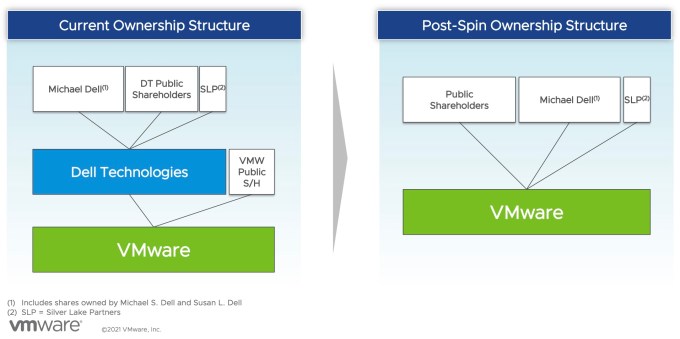
Here’s how VMware described it to shareholders in a presentation this week. The graphic shows that under the new agreement, VMware is no longer a subsidiary of Dell and will now be an independent company.

Chart showing before and after structure of Dell spinning out VMware. In the after scenario, VMware is an independent company.

Image Credits: VMware

But with VMware tipped to become independent once again, it could become something of a takeover target. When Dell controlled VMware thanks to majority ownership, a hostile takeover felt out of the question. Now, VMware is a more possible target to the right company with the right offer — provided that the Dell spinout works as planned.

Buying VMware would be an expensive effort, however. It’s worth around $67 billion today. Presuming a large premium would be needed to take this particular technology chess piece off the competitive board, it could cost $100 billion or more to snag VMware from the public markets.

So VMware will soon be more free to pursue a transaction that might be favorable to its shareholders — which will still include every Dell shareholder, because they are receiving stock in VMware as part of its spinout — without worrying about its parent company simply saying no.