Startups Weekly: All these startups are raising big rounds

TechCrunch’s Connie Loizos published some interesting stats on seed and Series A financings this week, courtesy of data collected by Wing Venture Capital. In short, seed is the new Series A and Series A is the new Series B. Sure, we’ve been saying that for a while, but Wing has some clean data to back up those claims.

Years ago, a Series A round was roughly $5 million and a startup at that stage wasn’t expected to be generating revenue just yet, something typically expected upon raising a Series B. Now, those rounds have swelled to $15 million, according to deal data from the top 21 VC firms. And VCs are expecting the startups to be making money off their customers.

“Again, for the old gangsters of the industry, that’s a big shift from 2010, when just 15 percent of seed-stage companies that raised Series A rounds were already making some money,” Connie writes.

As for seed, in 2018, the average startup raised a total of $5.6 million prior to raising a Series A, up from $1.3 million in 2010.

Now on to IPO updates, then a closer look at all the companies raising big rounds. Want more TechCrunch newsletters? Sign up here. Contact me at [email protected] or @KateClarkTweets.
Slack iOS logo (2019)

IPO corner

Slack: The workplace communication software provider dropped its S-1 on Friday ahead of a direct listing. That’s when companies sell existing shares directly to the market, allowing them to skip the roadshow and minimize the astronomical fees typically associated with an initial public offering. Here’s the TLDR on financials: Slack reported revenues of $400.6 million in the fiscal year ending January 31, 2019, on losses of $138.9 million. That’s compared to a loss of $140.1 million on revenue of $220.5 million for the year before. Slack’s losses are shrinking (slowly), while its revenues expand (quickly). It’s not profitable yet, but is that surprising?

Zoom was the Slack we thought Slack was all along.

— alex (PVD) (@alex) April 26, 2019

Uber: The ride-hail giant is fast approaching its IPO, expected as soon as next week. On Friday, the company established an IPO price range of $44 to $50 per share to raise between $7.9 billion and $9 billion at a valuation of approximately $84 billion, significantly lower than the $100 billion previously reported estimations. The most likely outcome is Uber will price above range and all the latest estimates will be way off course. Best to sit back and see how Uber plays it. Oh, and PayPal said it would make a $500 million investment in the company in a private placement, as part of an extension of the partnership between the two.

There are a lot of fascinating companies raising colossal rounds, so I thought I’d dive a bit deeper than I normally do. Bear with me.

Carbon: The poster child for 3D printing has authorized the sale of $300 million in Series E shares, according to a Delaware stock filing uncovered by PitchBook. If Carbon raises the full amount, it could reach a valuation of $2.5 billion. Using its proprietary Digital Light Synthesis technology, the business has brought 3D-printing technology to manufacturing, building high-tech sports equipment, a line of custom sneakers for Adidas and more. It was valued at $1.7 billion by venture capitalists with a $200 million Series D in 2018.

Canoo: The electric vehicle startup formerly known as Evelozcity is on the hunt for $200 million in new capital. Backed by a clutch of private individuals and family offices from China, Germany and Taiwan, the company is hoping to line up the new capital from some more recognizable names as it finalizes supply deals with vendors, according to reporting from TechCrunch’s Jonathan Shieber. The company intends to make its vehicles available through a subscription-based model and currently has 400 employees. Canoo was founded in 2017 after Stefan Krause, a former executive at BMW and Deutsche Bank, and another former BMW executive, Ulrich Kranz, exited Faraday Future amid that company’s struggles.

Starry: The Boston-based wireless broadband internet startup has authorized the sale of Series D shares worth up to $125 million, according to a Delaware stock filing. If Starry closes the full authorized raise it will hold a post-money valuation of $870 million. A spokesperson for the company confirmed it had already raised new capital, but disputed the numbers. The company has already raised more than $160 million from investors, including FirstMark Capital and IAC. The company most recently closed a $100 million Series C this past July.

Selina & Sonder: The Airbnb competitor Sonder is in the process of closing a financing worth roughly $200 million at a $1 billion valuation, reports The Wall Street Journal. Investors including Greylock Partners, Spark Capital and Structure Capital are likely to participate. Sonder is four years old but didn’t emerge from stealth until 2018. The startup, which turns homes into hotels, quickly attracted more than $100 million in venture funding. Meanwhile, another hospitality business called Selina has raised $100 million at an $850 million valuation. The company, backed by Access Industries, Grupo Wiese and Colony Latam Partners, builds living/co-working/activity spaces across the world for digital nomads.
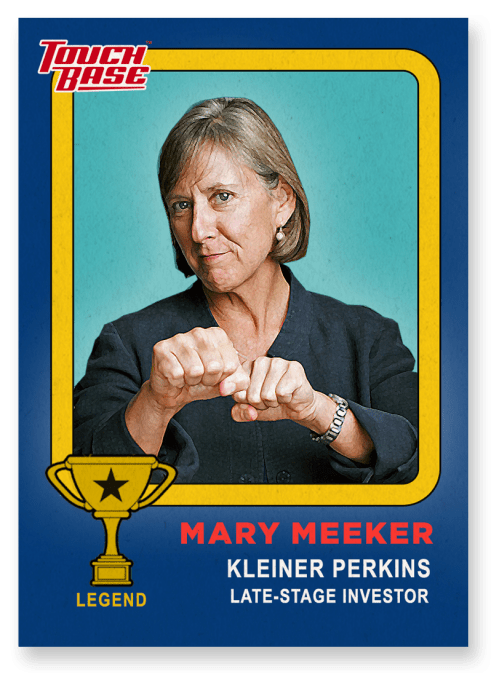
Fresh funds: Mary Meeker has made history with the close of her new fund, Bond Capital, the largest VC fund founded and led by a female investor to date. Bond has $1.25 billion in committed capital. If you remember, Meeker ditched Kleiner Perkins last fall and brought the firm’s entire growth team with her. Kleiner said it was a peaceful split that would allow the firm to focus more on its early-stage efforts, leaving the growth investing to Bond. Fortune, however, reported this week that a power struggle of sorts between Meeker and Mamoon Hamid, who joined recently to reenergize the early-stage side of things, was a larger cause of her exit.

Plus, SOSV, a multi-stage venture firm that was founded as the personal investment vehicle of entrepreneur Sean O’Sullivan after his company went public in 1994, has raised $218 million for its third fund. The vehicle has a $250 million target that SOSV expects to meet. Already, the fund is substantially larger than the firm’s previous vehicle, which closed with $150 million.

A grocery delivery startup crumbles: Honestbee, the online grocery delivery service in Asia, is nearly out of money and trying to offload its business. Despite looking impressive from the outside, the company is currently in crisis mode due to a cash crunch — there’s a lot happening right now. TechCrunch’s Jon Russell dives in deep here.

Extra Crunch: When it comes to working with journalists, so many people are, frankly, idiots. I have seen reporters yank stories because founders are assholes, play unfairly, or have PR firms that use ridiculous pressure tactics when they have already committed to a story.” Sign up for Extra Crunch for a full list of PR don’ts. Here are some other EC pieces to hit the wire this week:

Equity: If you enjoy this newsletter, be sure to check out TechCrunch’s venture-focused podcast, Equity. In this week’s episode, available here, Crunchbase News editor-in-chief Alex Wilhelm and I chat about Kleiner Perkins, Chinese IPOs and Slack & Uber’s upcoming exits. 
Elon Musk, SEC agree to guidelines on Twitter use

Tesla,  Elon Musk and the U.S. Securities and Exchange Commission reached an agreement Friday that will give the CEO freedom to use Twitter —within certain limitations — without fear of being held in contempt for violating an earlier court order.

Musk can tweet as he wishes except when it’s about certain events or financial milestones. In those cases, Musk must seek pre-approval from a securities lawyer, according to the agreement filed with Manhattan federal court.

U.S. District Judge Alison Nathan, the presiding judge on this matter, must still approve the deal. Nathan had given the SEC and Musk two weeks to work out their differences and come to a resolution.

Musk must seek pre-approval if his tweets include:

  • any information about the company’s financial condition or guidance, potential or proposed mergers, acquisitions or joint ventures,
  • production numbers or sales or delivery number (actual, forecasted, or projected),
  • new or proposed business lines that are unrelated to then-existing business lines (presently includes vehicles, transportation, and sustainable energy products);
  • projection, forecast, or estimate numbers regarding Tesla’s business that have not been previously published in official company guidance
  • events regarding the company’s securities (including Musk’s acquisition or disposition of shares)
  • nonpublic legal or regulatory findings or decisions;
  • any event requiring the filing of a Form 8-K such as a change in control or a change in the company’s directors; any principal executive officer, president, principal financial officer, principal accounting officer, principal operating officer, or any person performing similar functions

The fight between the two parties began after Musk’s now infamous August 7, 2018 tweet that had “funding secured” for a private takeover of the company at $420 per share. The SEC filed a complaint in alleging that Musk had committed securities fraud.

Musk and Tesla settled with the SEC last year without admitting wrongdoing. Tesla agreed to pay a $20 million fine; Musk had to agree to step down as Tesla chairman for a period of at least three years; the company had to appoint two independent directors to the board; and Tesla was also told to put in place a way to monitor Musk’s statements to the public about the company, including via Twitter.

The fight was re-ignited after Musk sent a tweet on February 19 that Tesla would produce “around” 500,000 cars this year, correcting himself hours later to clarify that he meant the company would be producing at an annualized rate of 500,000 vehicles by year end.

The SEC argued that the tweet sent by Musk violated their agreement. Musk has said the tweet was “immaterial” and complied with the settlement.

The SEC had asked the court to hold Musk in contempt for violating a settlement agreement reached last October over Musk’s now infamous “funding secured” tweet. The SEC had argued that Musk was supposed to get approval from Tesla’s board before communicating potentially material information to investors, the agency has argued. The SEC claimed a February 19 tweet violated the agreement.

Musk has steadfastly maintained that he didn’t violate the agreement.

Equity Shot: Uber’s IPO terms and Slack’s S-1

Hello and welcome back to Equity, TechCrunch’s venture capital-focused podcast, where we unpack the numbers behind the headlines.

Kate and Alex are back (again), bringing you the latest on the IPO front. As Friday is coming to a close, we’ll keep this post short to leave plenty of room for you to dig into the audio. Welcome to the weekend.

Up first we dug into Uber’s latest S-1 filing. This time, the company set a price range for itself (TechCrunch’s coverage here), valuing itself at $84 billion and also detailing estimates of its first-quarter results (Crunchbase News’s notes here).

We suspect Uber will ultimately price a top that range. Time will tell.

And then we turned to Slack, who’s direct listing will help set the historical tone for the unicorn era; screw your money, Slack says, we have our own. Well maybe not, but the company has impressive growth, killer margins, and, to our surprise, larger GAAP deficits than we expected. The company’s filing was fascinating.

But worry not, we can figure out how to value Slack. It’s Uber that left us scratching our heads. Expect next week to be another blizzard of news and numbers.

Thanks as always for listening to the show. We’ve never had more downloads than these last few weeks. It means a lot that you want to hang out with us. Don’t forget that we have an email address ([email protected]), and a hashtag that Alex needs to learn to use: #equitypod.

Equity drops every Friday at 6:00 am PT, so subscribe to us on Apple PodcastsOvercast, Pocket Casts, Downcast and all the casts.

Is the Samsung Galaxy Fold a bad omen for foldables?

I wrote a lot about the Galaxy Fold here. After a week with the device, I was left with mixed feelings independent of the whole ongoing display saga. The TLDR; of it is the story of a first-generation device that’s full of promise but still a bit clunky and prohibitively priced.

Of course, the real reason we couldn’t possibly recommend the device is the high percentage of issues around the device. Samsung issued a handful of early units to reviewers and multiple devices returned with broken screens. Samsung was quick to downplay the issue, but ultimately apologized, issued early findings and pushed the release back to an undisclosed date.

The Fold was supposed to be released today, and until Monday, Samsung had us convinced that it would hit that optimistic time frame. The fact of it all, however, is that the timing was always in question. The device was officially unveiled at an event in February. A week later at Mobile World Congress, the closest we got to the device was the other side of a plate of display glass and a velvet rope. It doesn’t exactly instill confidence in a product.

Later that day, Huawei gave us hands-on time with its own (still unreleased) foldable, the Mate X. Granted, the time was limited and a rep was hovering over us the whole time, but being able to touch the device goes a long way.

For the moment, Samsung’s in lockdown mode. Reviewers (ourselves included) have returned the devices at the company’s behest. A week with the phone was always the plan, as Samsung was likely planning to send it out to additional reviewers. I suspect all the breakages have put the brakes on that for now.

More notably, Samsung convinced iFixit to pull a lengthy teardown that referred to the Fold’s display as “alarmingly fragile.” The write-up has been replaced by a lengthy note explaining the site’s position and Samsung’s role in the takedown:

We were provided our Galaxy Fold unit by a trusted partner. Samsung has requested, through that partner, that iFixit remove its teardown. We are under no obligation to remove our analysis, legal or otherwise. But out of respect for this partner, whom we consider an ally in making devices more repairable, we are choosing to withdraw our story until we can purchase a Galaxy Fold at retail.

It’s easy to understand why the piece irked Samsung, of course, but it’s hard to imagine that it did much additional damage to an already problematic situation. We covered the story, along with dozens of other sites. I personally found it an insightful look at the product, as iFixit described a display that wasn’t sufficiently reinforced and an otherwise impressive gear system that let dirt and debris fall behind the screen.

In fact, Samsung’s own “initial findings” were actually pretty well in line with iFixit’s:

Initial findings from the inspection of reported issues on the display showed that they could be associated with impact on the top and bottom exposed areas of the hinge. There was also an instance where substances found inside the device affected the display performance.

From the outset, many were suspect about the product’s ability to hold up to real-world stresses without the presence of a Gorilla Glass-like screen covering. Corning has already noted that it’s working on just such a flexible material, but Samsung didn’t seem much interested in waiting.

In retrospect, the process of bringing the technology to market felt like a thoughtful, leisurely progression, followed by a potentially careless sprint the final few yards before the end zone. While Samsung had been showcasing flexible display technology since CES 2011, it no doubt saw the writing on the wall heading into this year. Royole had already launched its own reference device, and the week following the Fold’s announcement, we saw the aforementioned handset from Huawei and a reference design from TCL. Xiaomi showed off its own project at around the same time, and leaks have highlighted competition from companies like Motorola.

Samsung, it seems, wanted badly to be the first to market with a consumer device. It’s a stumble, but as we’ve pointed out previously, Samsung’s been through worse. This isn’t the Galaxy Note 7 part two for two key reasons:

  1. The product didn’t officially ship, so these devices could be considered a kind of (very public) extended beta
  2. Nothing actually exploded and the Fold hasn’t been banned from any airlines

The broader question, however is two-fold:

  1. What will this mean for Samsung
  2. What will this mean for foldables as a category

The answer, I think is the same for both: not very much. Both the phone and the category will live and die by consumer demand, not some dumb stumble by Samsung.

Huawei’s got a golden opportunity to show what can be done here (even though ongoing legal troubles will make the Mate X tough to come by in the U.S. And in spite of how well the first Fold sells, it seems likely that Samsung has a sequel in the works. Remember how masterfully the company spun the Note after the smoke had cleared? The arrival of its eight-point battery testing turned battery safety from a concern to a feature.

Of course, this will be a short-term setback from the company and product. Consumers will smartly be cautious, even after the company says it’s hammered out the original issues and firmed up a release date. If there’s major learning from the Note debacle that can be applied here, it’s that companies can be too eager to sound the all clear. Remember, the Note 7 was subject to two recalls.

But like the Note 7, these early misadventures will likely do little to impact the future of foldables — or Samsung’s bottom line.

The FBI searched the offices of microbiome startup uBiome

Earlier today, agents from the FBI searched the offices of uBiome, the medical testing company that sells analyses of an individual’s microbiome — the bacteria that live in the gut, according to a report in The Wall Street Journal.

The FBI is reportedly investigating uBiome’s billing practices, the WSJ reported.

“I can confirm that special agents from the FBI San Francisco Division are present at 360 Langton Street in San Francisco conducting court-authorized law enforcement activity. Due to the ongoing nature of the investigation, I cannot provide any additional details at this time,” a spokesperson for the FBI confirmed.

360 Langton street is listed as an address for uBiome.

Numerous questions surrounding the clinical validity and efficacy of microbiome analysis remain, and uBiome could be under the microscope for the fact that it offers physician-ordered and consumer-requested test kits.

We are cooperating fully with federal authorities on this matter. We look forward to continuing to serve the needs of healthcare providers and patients,” a spokesperson for the company wrote in an email to TechCrunch.

The company is one of a growing number of startups raising money for consumer-facing and clinical applications around the nascent field of microbiome research.

Founded by Jessica Richman in 2012, uBiome has gone from a crowdfunded startup that raised $350,000 to begin developing testing for microbiome health to a company that reportedly raised $83 million last year.

As uBiome faces potential legal troubles with the federal government, other microbiome startups are also struggling.

Earlier this week, Arivale, a company that used a combination of genetic and microbiome testing and coaching to improve long-term consumer health, was forced to shut down its “consumer program” after raising more than $50 million from investors, including Maveron, Polaris Partners and ARCH Venture Partners.

“Regrettably… we are terminating our consumer program. Our decision to do so is attributable to the simple fact that the cost of providing the service exceeds what our customers can pay for it,” the company wrote on its website. “We believe the costs of collecting the genetic, blood and microbiome assays that form the foundation of the program will eventually decline to a point where the program can be delivered to consumers cost-effectively. However, we are unable to continue to operate at a loss until that time arrives.”

Some customers of uBiome were able to avoid those costs by having insurance providers pick up the tab. What the government is likely investigating is whether those insurance claims were fraudulent.

It’s open season for poaching talent in Silicon Valley

Nick Saenz & John Frost
Contributor

Nick Saenz and John Frost are attorneys at Lewis & Llewellyn LLP, a boutique litigation firm in San Francisco specializing in complex corporate litigation.

Several recent court decisions have changed the landscape of California’s competition law, concluding that employee non-solicitation provisions are per se invalid. These cases have major implications both for mature companies relying on such provisions to preserve their talent pool, and for startups and other companies looking to attract the best people from their competitors.

California law is well-known for favoring open business competition. A fundamental part of this policy is that, unlike the overwhelming majority of other states, California generally does not allow companies to contractually prevent their employees from leaving to join or start a competing business. Unrestrained by “non-compete” provisions, employees can freely move among competitors, which helps facilitate the formation of disruptive new businesses and fuels the dynamic Silicon Valley economy.

But, while classic non-competes are invalid, companies have long been able to rely on certain other contractual provisions that do not flatly prohibit an employee from working for a competitor. One such provision is an employee non-solicitation clause, which, rather than barring an employee from working for a competitor like a non-compete, prohibits a departing employee from trying to recruit other, current company employees to join the departing employee at his or her new company. California businesses — large and small, early and late-stage — have routinely included such provisions in their employment contracts.

For some time the enforceability of these “employee non-solicit” provisions has been unclear and largely dependent on the facts of individual cases, but several recent decisions have treated employee non-solicit provisions like non-competes and concluded that non-solicits are invalid under California law. These decisions pave the way for new startups to more readily attract talent and increases the potential liability for companies that rely on non-solicit provisions.

In other words, the courts might have declared that it is open season for companies to poach another business’s talent pool.

Here’s a closer look at each case, followed by our analysis of the implications.

Section 16600: The California Law Protecting Unrestrained Employee Mobility.

Why are people still giving Magic Leap money?

If Magic Leap fails, the skeptics will at least have to admire the AR startup’s keen ability to raise vast amounts of capital.

The company announced today that it has locked down another $280 million in a deal with Japan’s largest mobile operator, Docomo. The deal brings the company’s ever-swelling total cash raised to $2.6 billion. The deal follows an investment from AT&T last year also focused on the company’s cloud ambitions.

“DOCOMO aims to co-create advanced MR services and expand the XR market by leveraging open innovation and combining innovative technologies such as Spatial Computing provided by Magic Leap with DOCOMO’s assets including our 5G network and 70 million membership base,” Docomo CEO Kazuhiro Yoshizawa said in a press release.

This new money arrives as the company devotes more attention to the “Magicverse,” its plan for a spatially mapped digital infrastructure layer that can be a foundational step for cloud AR experiences. Magic Leap probably makes more sense as a cloud platform play over a hardware play, given where the market is, but it really isn’t clear what their advantages are compared to cloud incumbents like Microsoft, Amazon or Google with teams also focused on AR/VR.

Sure, they’ve partnered with these telecoms for 5G, but it’s unclear what those high-profile-conscious couplings do for Magic Leap if their hardware hopes (and the broader market they fit into) are far, far less-realized than 5G tech even is.

The company has just sunk so much money into its hardware, and their business there might not end up looking markedly different than Facebook’s Oculus (i.e. a slowly filling money pit) if the startup continues in its ambitions as a consumer company. The company’s sole product, the Magic Leap One, retails for $2,295.

In the early days, the hardware Magic Leap was pursuing was unprecedented, but reality got in the way. Now, the differences between what they’ve built and what competitors like Microsoft have are minimal, though while the HoloLens is largely a forward-thinking enterprise vehicle for Microsoft’s Azure cloud services, Magic Leap is stuck courting VR game developers to devote time and money to building artistic mini-games for a platform with a sliver of the users of the already niche virtual reality market.

Magic Leap tried to win a $480 million AR military contract, but it was awarded to Microsoft.

Facebook devoted hundreds of millions to funding game development grants; surely there’s a better place for Magic Leap to put investor cash than directly into content plays, but there aren’t many shortcuts to scaling a wholly consumer release without getting this infrastructure in place first.

What pays the bills in the meantime? I guess Docomo, this time.

PayPal makes a big marketplace play with its $500M investment in Uber

Uber’s announcement of its IPO pricing earlier today came with a $500 million belated Easter egg. The payments giant PayPal is making a half-billion-dollar investment in the company, paying $47 per share, which gives the company a valuation of $78.8 billion (in the middle of the range of Uber’s IPO pricing of $44-$50 per share).

Neither Uber nor PayPal gave much detail about the $500 investment. Uber’s S-1 and a short statement on LinkedIn from PayPal’s CEO Dan Schulman both used the same wording, noting the deal would help the two work on “future commercial payment collaborations, including the development of Uber’s digital wallet.” So what’s actually going on here?

The deal clearly gives Uber another significant piece of financial padding going into its public listing — and it needs it, with a loss of $1 billion in the last quarter alone — as well as a closer commitment from one of its existing payments partners. But it’s also a significant move for PayPal as the company works on building the next stage of its financial services empire.

The company — untethered from eBay after first spinning out from the marketplace company in 2014 and eventually losing its status as its primary payments provider last year — has been building out a profitable business on its own steam, reporting 227 million accounts earlier this week with revenues up more than 30 percent to $4.13 billion for the quarter.

At the same time, it’s also been slowly laying the groundwork for how it can leverage deals with other companies to boost that growth even more.

There have been a number of smaller strategic investments in a range of startups, including European startups like savings company Raisin and cross-border payment startup PPRO, as well as Asian startups Pine Labs and Viva Republica. However, PayPal took a much bigger bet this year that, like the Uber investment announced today, underscores how it is also evaluating and buying into larger marketplaces, too.

In March, it made its biggest investment to date as an independent company, putting $750 million into Argentina’s MercadoLibre, an e-commerce powerhouse that acts as a kind of eBay of Latin America, with auctions and a marketplace for buyers and sellers to connect, and a payments system called MercadoPago.

Uber-size me

The eBay similarity probably made MercadoLibre a natural partner for PayPal.

But more likely, I think the investment is part of a super-sized next step modeled on that eBay relationship — a way for PayPal to build its network beyond what it can build on its own steam, by catching a ride on other high-growth companies to pick up some of their network effects.

This is, in fact, something that Schulman talked about just days ago in PayPal’s earnings call:

We see international as a tremendous opportunity space for us. And if I take a step back, we’re willing to invest in companies or acquire companies that we believe advance our strategic agenda. We do want to be the leading global digital payments platform, and that means looking across the world at who are the leading players there and how might we partner together in some way to take our respective platforms, the respective number of customers we each have. MercadoLibre, between their marketplace and MercadoPago, their payments infrastructure, they have 200 million-plus customers themselves. And so you put that together with ours, you have almost 500 million customers… there are companies like MercadoLibre where a strategic partnership may make sense for us, and they allow us to expand our presence into a geography or a set a capabilities. And by the way, there may be other companies around the world that offer similar strategic options for us and we’d be willing to explore partnerships, very akin to what we did with MercadoLibre.

The fact is, though, there aren’t really any more big e-commerce marketplaces left to partner with. Amazon is PayPal’s arch nemesis, Alibaba has Alipay and the eBay ship has sailed. (Walmart, incidentally, is also a PayPal partner, and I’ll be interested to see what develops there, including with Walmart’s own big e-commerce marketplace purchase, Flipkart.)

In the meantime, we’re seeing a new opportunity emerge with high-growth companies that are building strong commercial relationships with their customers, in the form of these large transportation-on-demand providers, like Uber.

There are three areas where PayPal is hoping that its Uber investment will play out (and hopefully pay out).

The first of these will be increasing transactions. Today, PayPal is Uber’s leading payment provider in the U.S. and Australia, and with this investment, from what I understand, it will be looking to ramp up and take on that role in more countries in the months ahead. That will pose an interesting competitive threat to the other payment companies that work with Uber, such as Adyen, which itself had a very successful public markets debut earlier this year and lists Uber as one of its biggest customers.

The second will be helping to build and run Uber’s own efforts in providing payments and managing transactions. Right now, the main manifestation of that is Uber Cash, the digital wallet that Uber launched in September that lets users top up Uber accounts with money that they can use on Uber services, sweetening the deal to lure more users to this by offering discounts.

A big reason Uber is building Uber Cash is because once it can control the flow of the money itself, it doesn’t have to pay transaction costs on those purchases, and along with another product it introduced in 2017, the Uber Visa Card, it becomes a gatekeeper of its customers’ spending.

This might sound familiar: It is similar to the model PayPal built with in its own service. It’s not clear how the two will work together on this, whether it will be simply an integration so that PayPal will become one more way to top up your Uber Cash, or whether PayPal will help power the whole service.

The latter leads to the third way that PayPal and Uber might be working together down the line.

PayPal today has 22 million merchants on its platform, and an integration with Uber — through Cash and its Card — could become another opportunity to give those merchants an opportunity to sell: just as people can pay today for something on a site with PayPal, one idea that’s being considered is how to expand the Uber Cash network to allow people to pay for more than just Uber rides and Uber Eats.

“Uber has a large, engaged user base and that presents an opportunity to cross-sell other services using Uber Cash and Uber Card,” one source told me. “The bigger vision is to be a network of networks, connecting these leading marketplaces and payment networks to see more growth in commerce.”

Grabbing its chance

Uber is just one of the transportation/new marketplace companies that PayPal has been looking at. From what we understand, PayPal plans to make more investments of this kind in other large e-commerce and marketplace businesses, to the tune of between $1 billion and $3 billion annually.

As part of that, PayPal is considering an investment in another big transportation-on-demand provider, Grab in South East Asia.

In March, we reported that Grab was talking to PayPal to take an investment in its business — a deal we understand from sources is still in play.

The interest in Grab is similar to what PayPal sees as its opportunity with Uber. The investment would be specifically in connection with the company’s financial services unit. This includes GrabPay, a service the company has built as a payments hub for more than just rides and other services provided by Grab directly, but also linked to online and offline merchants in the markets where it operates.

Uber has yet to build out any kind of a network like GrabPay, but it’s interesting that it has dabbled in lots of areas where it leverages its existing user base to expand its commercial network. They include building an ad network, plans for a “content marketplace” and local offers with Visa for goods and services at your destination or close to it.

PayPal, being the holder of a vast amount of transactional data and understanding about how people spend their money, has become a clever reader of signals and subsequently how a financial empire might develop.

“There aren’t that many other established payment ecosystems, but these ridesharing companies are particularly well-positioned because of their user numbers and engagement,” our source said. Investments like the one in Uber gives PayPal a chance at a deeper relationship with Uber, and a seat in its vehicle.

TurboTax and H&R Block hide their free tax filing tools from Google on purpose

Low-income Americans can file their taxes for free, but odds are they ended up paying anyway.

ProPublica found that tax-filing giant Intuit is deliberately concealing search results for its free filing service, instead pointing all consumers toward its paid products. While users visiting TurboTax’s homepage will be greeted with what looks like free tax software, the software’s parent company usually finds a way to charge anyone using the product. The manipulative design choice echoes recent conversation around dark pattern design and likely explains why free filing services remain underutilized.

Intuit’s true free filing software is called TurboTax Free File. Compared to the company’s main TurboTax portal, TurboTax Free File is much more difficult to find. That service, designed to make the process free for low-income filers individually making less than $34,000 a year, is part of an agreement between tax-filing companies and the IRS stipulating that a free option must be provided for lower-income filers. In the course of reporting, ProPublica found that Intuit competitor H&R Block uses the same tactic to bury its own free service, H&R Block Free File.

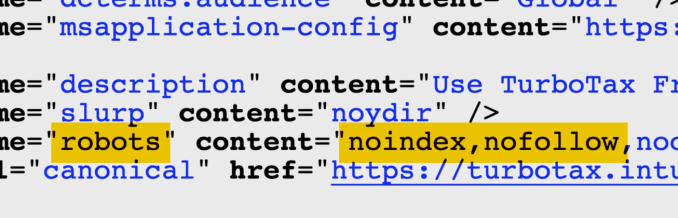
To effectively bury its free filing service, TurboTax included a snippet of code in the page’s robots.txt file instructing search engines not to index it. The code was spotted by a Twitter user Larissa Williams and Redditor ethan1el.

Screenshot via ProPublica

Instead of pointing users toward its free file tool, TurboTax funnels the vast majority of users toward its paid and premium services, whether they qualify for free filing or not. The Senate Finance Committee’s top Democrat Ron Wyden denounced the tactic as “outrageous” in a statement to ProPublica, indicating that he intended to bring up the issue with the IRS.

Daily Crunch: Facebook faces new privacy investigations

The Daily Crunch is TechCrunch’s roundup of our biggest and most important stories. If you’d like to get this delivered to your inbox every day at around 9am Pacific, you can subscribe here.

1. Facebook hit with three privacy investigations in a single day

First came a probe by the Irish data protection authority looking into the breach of “hundreds of millions” of Facebook and Instagram user passwords that were stored in plaintext on its servers. Then, Canadian authorities confirmed that the beleaguered social networking giant broke its strict privacy laws.

Lastly, and slightly closer to home, Facebook was hit by its third investigation — this time by New York attorney general Letitia James.

2. Movie subscription service Sinemia is ending US operations

Over the past few months, Sinemia has gone from promising MoviePass competitor to the source of frustration for moviegoers across the country.

3. Slack files to go public, reports $138.9M in losses on revenue of $400.6M

The company attributes these losses to its decision “to invest in growing our business to capitalize on our market opportunity,” and notes that they’re shrinking as a percentage of revenue.

CHICAGO, IL – JANUARY 11: A sign hangs outside Walmart store on January 11, 2018 in Chicago, Illinois. (Photo by Scott Olson/Getty Images)

4. Walmart unveils an AI-powered store of the future, now open to the public

Walmart unveiled a new test grounds for emerging technologies, including AI-enabled cameras and interactive displays. This “store of the future” operates out of a Walmart Neighborhood Market in Levittown, New York.

5. Grocery delivery startup Honestbee is running out of money and trying to sell

The company has held early conversations with a number of suitors in Asia, including ride-hailing giants Grab and Go-Jek, over the potential acquisition of part, or all, of its business.

6. Amazon is prepping a high-fidelity TIDAL competitor

That’s according to Music Business Worldwide, which also accurately reported the recent launch of a free, ad-supported Amazon Music service for Echo device owners.

7. Zwift CEO Eric Min on fitness-gaming and bringing esports into the Olympics

The five-year-old startup has raised more than $170 million as a pioneer of fitness-gaming ? physical sport carried out in a virtual world. (Extra Crunch membership required.)

How to source hard-to-fill programming positions

Zack Burt
Contributor

Zack Burt is an American computer programmer. He founded Code For Cash, the tech recruiting firm.

The competition is intense for great tech talent, and it’s even harder to find the most qualified people who are also the right fit for your company

This article shares some practical processes that you can add to your human resources function in order to accelerate the programmer pipeline, based on the years I have spent as a hiring focused software engineer at growing startups and now running my own recruiting firm.

Our recruiting strategy is surprisingly simple, and boils down to optimizing various segments of the sourcing funnel: awareness, pageviews, and application submits.

What ties these tactics together, though, is you, your company, what you’re offering, and how you approach the people you want to hire. If you want to build a strong, diverse team, you need to develop a thoughtful, empathetic and proactive approach before you can optimize.

Within the article we cover:

In the article’s appendix, I also provide our company’s 2019 checklist process — eighteen steps that we delegate to manage our sourcing process.

Elon Musk on taking Tesla private: ‘That ship has sailed’

Elon Musk would prefer if Tesla, which is known for its volatile share price and is among the most heavily shorted stock, were a private company, but acknowledged during an earnings call Wednesday that it wasn’t likely.

Musk can dream, can’t he?

“Unfortunately that ship had sailed,” Musk said flatly, in response to a question from Morgan Stanley analyst Adam Jonas.

Musk said Tesla as a public company was a distraction at times and then added, “I’m not sure what to do about it.”

The question came up as an increasing number of investors, known as shorts, bet that Tesla’s stock will decline. The stock is one of the largest automotive shorts globally, according to S3 Partners.

Taking the company private, a status in which Musk’s other company SpaceX remains, is a sore spot for the billionaire entrepreneur. And one that has caused legal woes and disrupted the stock price.

Musk famously tweeted in August 2018 that he was considering taking Tesla private and had “funding secured. Tesla published an email Musk sent to employees that described his rationale, only to back track a few weeks later and announce the company would remain public. That tweet got the attention of the U.S. Securities and Exchange Commission, which later accused Musk of securities fraud. The parties reached a settlement without admitting wrongdoing.

Under the settlement, Tesla agreed to add two independent directors and Musk would step down as chairman for three years. In December, Tesla added two independent directors to its board — Oracle founder, chairman and CTO Larry Ellison and Walgreens executive Kathleen Wilson-Thompson.

Despite the settlement, the relationship between Musk and the SEC remains strained. The agency requested a judge hold Musk in contempt for tweets containing allegedly material information. Musk and the SEC is expected to report to the judge Thursday as to whether they have reached a resolution.

Tesla reported Wednesday wider-than-expected loss of $702 million, or $4.10 a share, in the first quarter after disappointing delivery numbers, costs and pricing adjustments to its vehicles threw the automaker off of its profitability track.

While analysts had anticipated a loss — an adjusted loss of $1.15 a share on sales of $5.4 billion for the quarter, according to FactSet — actual losses stretched far beyond those expectations.

The loss included $188 million of non-recurring charges. When adjusted for one-time losses, Tesla lost $494 million, or $2.90 a share, compared with a loss of $3.35 a share a year ago. Tesla reported that it also incurred $67 million due to a combination of restructuring and other non-recurring charges.